
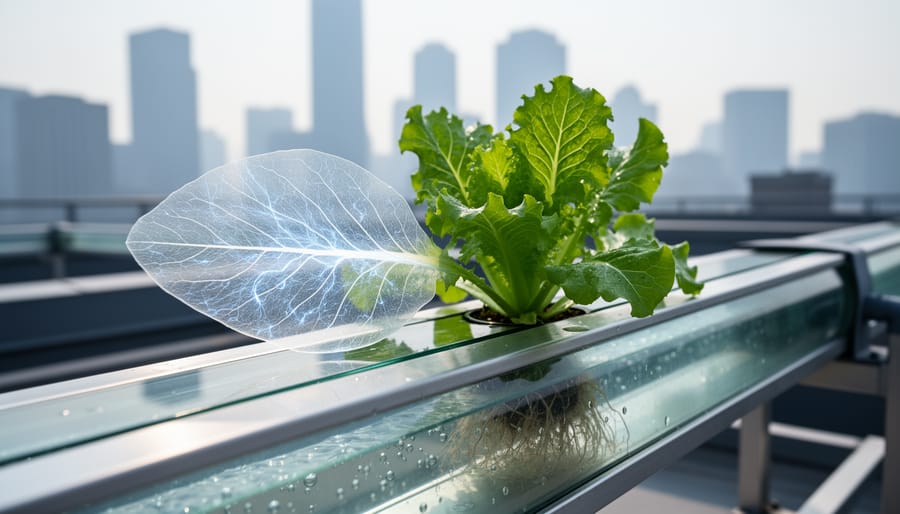
MOTS-c peptide is a mitochondrial-derived peptide that regulates cellular energy metabolism and stress response, and emerging research suggests it may hold surprising applications for urban agriculture and climate-resilient food systems. Originally identified in human mitochondrial DNA, this 16-amino-acid sequence has captured scientific attention for its ability to help cells manage metabolic stress and maintain function under challenging conditions.
For urban farmers and sustainability advocates, the relevance isn’t immediately obvious. MOTS-c doesn’t grow plants directly. Instead, researchers are exploring how principles from mitochondrial signaling might inform new approaches to plant stress tolerance, particularly in the harsh microclimates of rooftop gardens, vertical farms, and heat-island environments where traditional crops struggle.
The peptide works by activating specific cellular pathways that improve energy efficiency and stress adaptation. When human cells experience metabolic challenges like exercise or caloric restriction, MOTS-c levels increase, helping tissues optimize glucose use and resist oxidative damage. Scientists now wonder whether similar signaling mechanisms exist in plant mitochondria and could be harnessed to create crops better suited for urban growing conditions where temperature fluctuations, limited root space, and irregular water access create constant biological stress.
This cross-pollination between human health research and agricultural innovation represents exactly the kind of collaborative thinking that drives sustainable city design forward. While we’re years away from practical applications, understanding how organisms manage energy at the cellular level could reshape how we approach food production in space-constrained, resource-limited urban environments. The science is complex, but the potential impact on how cities feed themselves deserves attention from anyone invested in urban resilience and green infrastructure.
What MOTS-c Peptide Is and Why It Matters for Urban Food Systems
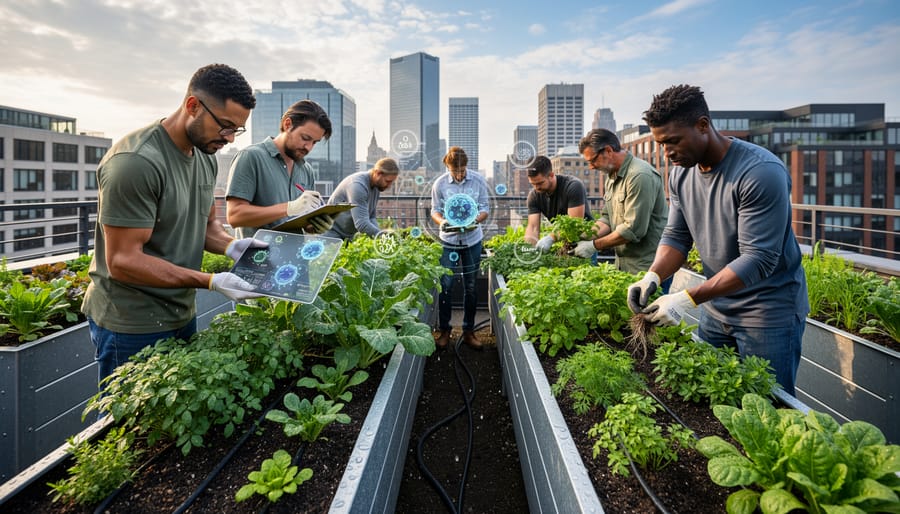
MOTS-c stands for Mitochondrial Open reading frame of the Twelve S rRNA-c, a small peptide encoded within our mitochondrial DNA rather than the cell nucleus. Discovered in 2015 by researchers studying mitochondrial biology, this 16-amino-acid molecule quickly captured scientific attention for its unexpected role in regulating how cells respond to stress and manage energy. While most known proteins come from nuclear DNA, the MOTS-c mitochondrial-encoded peptide represents a fascinating class of molecules that mitochondria produce to communicate with the rest of the cell, essentially serving as metabolic messengers during challenging conditions.
In human and animal studies, MOTS-c appears when cells face energy deficits, heat stress, or oxidative pressure. The peptide helps recalibrate metabolism, shifting fuel use and activating protective pathways that keep cellular machinery running under duress. Think of it as an internal alarm system that not only detects trouble but also coordinates the response, helping organisms adapt rather than simply endure.
Plants possess their own mitochondrial signaling networks remarkably similar to those found in animals. Their mitochondria produce peptides and other molecules that coordinate responses to drought, temperature extremes, nutrient scarcity, and pollutant exposure. For urban agriculture practitioners, this parallel matters deeply. Rooftop gardens, vertical farms, and container systems expose plants to conditions far more variable than traditional agriculture: scorching midday heat radiating from dark membranes, sudden temperature drops at night, limited water retention in shallow soil, and wind exposure that accelerates moisture loss.
Understanding how mitochondrial peptides regulate stress adaptation provides a scientific framework for supporting plant resilience. When you recognize that plants already possess sophisticated cellular communication systems to manage adversity, you can design growing environments and select varieties that work with these natural mechanisms rather than against them. Instead of viewing urban growing conditions as obstacles requiring constant intervention, we start seeing them as environments where well-supported plants can activate their built-in adaptive responses, the same responses that mitochondrial signaling helps coordinate at the cellular level.
The Science Behind MOTS-c: From Mitochondria to Metabolic Signaling

How Mitochondrial Peptides Regulate Stress Responses
Mitochondrial-derived peptides (MDPs) function as signaling molecules that help cells detect and respond to environmental stress. When a plant faces drought, extreme heat, or nutrient scarcity, its mitochondria, the cellular powerhouses, don’t just produce energy. They also generate small peptides that communicate stress conditions throughout the organism, triggering protective responses.
MOTS-c belongs to this family of mitochondrial messengers. These peptides act as early-warning systems, initiating metabolic shifts before damage occurs. Under heat stress, for instance, MDPs can prompt cells to adjust their energy production pathways, maintain protein integrity, and stabilize membranes against temperature extremes. During drought, they help regulate water use efficiency and activate protective compounds.
For urban gardeners working with rooftop conditions, understanding these mechanisms matters because the same stressors, intense sun exposure, limited water availability, temperature swings between day and night, trigger these peptide responses in plants. A tomato plant in a rooftop container experiences mitochondrial signaling when soil dries out or when reflected heat from adjacent buildings creates localized hot spots.
Research shows that plants with robust mitochondrial signaling networks tolerate environmental challenges better than those with compromised cellular communication. This explains why some varieties thrive in harsh urban microclimates while others struggle. The peptides essentially help cells make informed decisions about resource allocation when conditions become difficult, preserving core functions while the plant adapts to its surroundings.
Energy Efficiency and Resource Management at the Cellular Level
At its core, MOTS-c influences how cells convert fuel into usable energy, a process that determines whether a plant thrives or merely survives in challenging conditions. When mitochondria operate efficiently, plants extract more value from every drop of water and gram of soil nutrient. This metabolic precision becomes critical in rooftop containers where resources are finite and stressed plants can’t afford wasteful energy expenditure.
Think of cellular energy management as a plant’s internal budget. MOTS-c-like peptide signaling helps optimize glucose metabolism and mitochondrial respiration, ensuring cells allocate energy where it’s most needed, root development during establishment, flowering under heat stress, or repair after wind damage. Plants with robust metabolic signaling pathways typically show stronger growth rates and better yield-to-input ratios, even when soil volume is restricted.
For urban gardeners, this science translates into understanding why some varieties perform dramatically better in containers than others. Cultivars with naturally efficient mitochondrial function tend to maintain vigorous growth despite the temperature swings and limited root zones typical of rooftop environments. They photosynthesize more effectively during shorter optimal windows and recover faster from environmental setbacks.
The practical takeaway: supporting plant mitochondrial health through proper nutrition, consistent moisture levels, and stress reduction creates conditions where natural energy efficiency mechanisms can function optimally. While we can’t directly administer peptides to tomatoes, we can design growing systems that allow plants’ own metabolic machinery to perform at its best, turning limited inputs into abundant harvests.
Emerging Research: MOTS-c Analogs and Plant Stress Tolerance

Research into plant peptide signaling has accelerated over the past five years, revealing parallels between animal mitochondrial-derived peptides like MOTS-c and stress response pathways in plant cells. While plants don’t produce MOTS-c itself, they generate analogous mitochondrial peptides that serve similar functions, coordinating cellular stress responses, optimizing energy use, and triggering adaptive mechanisms when growing conditions become challenging. For urban gardeners working in rooftop and vertical farm environments, this emerging science offers a window into how plants naturally equip themselves to handle the stressors inherent in agritecture settings.
A 2024 study from researchers at the Max Planck Institute identified a family of short mitochondrial peptides in Arabidopsis that activate under drought conditions, signaling cells to shift metabolic priorities toward water retention and root expansion. The peptides functioned as messengers between mitochondria and the nucleus, essentially telling the plant “conserve resources and adapt.” This mechanism mirrors aspects of MOTS-c function in animals, where the peptide helps cells maintain efficiency during metabolic stress. What makes this relevant to urban farming is that container-grown plants on rooftops face rapid soil drying and temperature swings, conditions where such adaptive signaling becomes crucial.
Current research focuses on several areas that intersect directly with urban agriculture challenges:
- Drought stress response pathways that improve water-use efficiency in limited soil volumes
- Temperature adaptation mechanisms helping plants tolerate heat reflected from rooftop surfaces
- Nutrient efficiency signaling that optimizes growth when soil fertility is constrained
- Antioxidant pathways activated by peptide signals to protect cells from environmental oxidative stress
Recent work from teams in Japan and the Netherlands has shown that certain plant species naturally produce higher levels of stress-responsive mitochondrial peptides. Tomatoes and peppers, both popular in rooftop gardens, demonstrate robust peptide signaling under heat stress, which may partly explain their adaptability to varied growing conditions. A 2025 field trial in Singapore examined peptide expression in vertical farm lettuce exposed to fluctuating temperatures, finding that cultivars with stronger peptide responses maintained better leaf quality and growth rates.
The science remains young, and researchers caution against expecting peptide-based interventions to replace fundamental good practices. No commercial products targeting plant mitochondrial peptide pathways are widely available as of 2026, though several biotech firms are exploring peptide-mimetic compounds that could enhance natural stress tolerance. For now, the research offers conceptual tools: understanding that plants possess sophisticated cellular communication systems helps growers appreciate why certain varieties thrive in challenging urban spots while others struggle, even when basic care is identical.
What this research makes clear is that plant resilience isn’t just about genetics in the traditional sense, it’s also about how efficiently a plant’s cells can talk to each other when trouble arrives. That’s the conversation peptides like these facilitate, and it’s happening right now in the tomatoes on your rooftop.
Practical Implications for Rooftop Gardens and Urban Farming
Selecting Resilient Plant Varieties for Urban Environments
Understanding how mitochondrial signaling supports stress tolerance helps urban growers make smarter plant selections for challenging rooftop and balcony environments. While we can’t yet directly measure MOTS-c-like peptides in garden plants, we can choose cultivars bred for the very traits these cellular mechanisms support: heat resistance, drought tolerance, and metabolic efficiency under stress.
Start with heritage and regionally adapted varieties, plants with proven track records in variable conditions often possess robust mitochondrial function developed through generations of natural selection. Tomato varieties like ‘Cherokee Purple’ and ‘San Marzano’ handle temperature swings better than many hybrids. Leafy greens such as ‘Red Russian’ kale and ‘Bloomsdale’ spinach maintain cellular integrity during brief heat spells common on sun-exposed roofs.
Look for descriptors in seed catalogs that signal stress resilience: “heat-tolerant,” “drought-resistant,” “cold-hardy,” or “vigorous under marginal conditions.” These traits often reflect efficient cellular energy management, the same metabolic pathways influenced by mitochondrial peptides. Peppers labeled as “productive in containers” typically manage resources well in restricted root zones where cellular efficiency matters most.
Native and climate-appropriate perennials like Jerusalem artichoke, wild bergamot, and native sedums have evolved sophisticated stress responses suited to local temperature extremes and moisture fluctuations. Incorporating these into effective urban gardening strategies builds natural resilience into your rooftop ecosystem. Pair stress-tolerant cultivars with microclimate positioning, shade-loving lettuces tucked behind heat-loving peppers, to support each plant’s cellular strengths while minimizing environmental pressures that challenge mitochondrial function.
Supporting Plant Mitochondrial Health Through Growing Practices
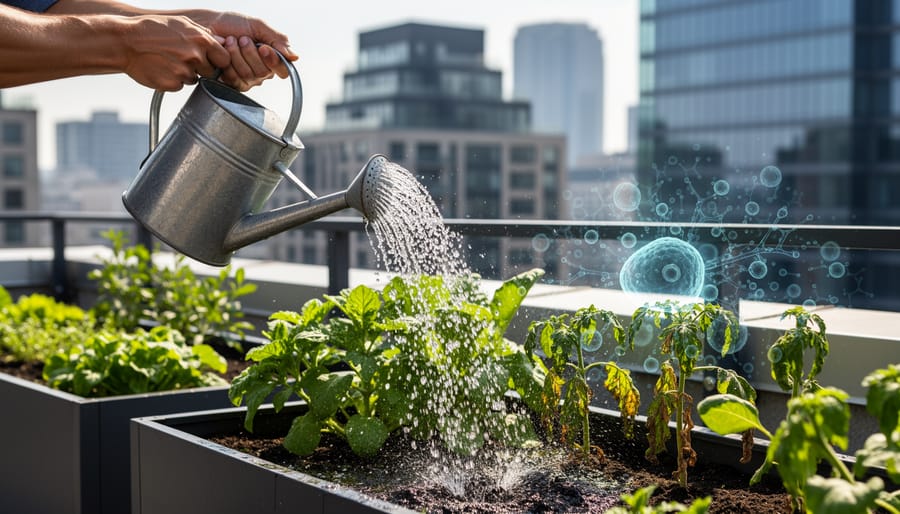
While we can’t directly administer peptides to our tomato plants, we can absolutely support their natural mitochondrial signaling through thoughtful cultivation practices that reduce cellular stress and optimize metabolic function.
Start with soil biology. Mitochondria thrive when roots can efficiently uptake nutrients and oxygen, which means maintaining active microbial communities in your growing medium. In containers and raised beds, incorporate quality compost and avoid compaction, dense, waterlogged soil starves root cells of oxygen, forcing mitochondria into less efficient anaerobic pathways. Consider adding mycorrhizal fungi at planting; these symbiotic partners extend root reach and improve nutrient delivery, reducing the metabolic burden on plant cells.
Water quality matters more than many urban gardeners realize. Chlorine, heavy metals, and dissolved salts in municipal water can stress cellular membranes and disrupt mineral uptake. A water filtration system removes these stressors, allowing mitochondria to focus on growth rather than damage control. Consistent soil moisture, neither drought-stressed nor waterlogged, also prevents the metabolic whiplash that comes from extreme fluctuations.
Temperature buffering protects mitochondrial function during heat stress. Light-colored containers, strategic shade cloth during peak summer, and reflective mulches all moderate root-zone temperatures. On rooftops where heat radiates from surrounding surfaces, even a few degrees cooler can mean the difference between cellular resilience and metabolic breakdown.
These practices won’t boost MOTS-c levels, but they create conditions where natural stress-response pathways can function as evolution intended.
Future Directions: Peptide Research and Sustainable Agritecture
The convergence of peptide science and urban agriculture opens exciting possibilities for addressing food security in growing cities. As research teams decode mitochondrial signaling pathways, we’re moving closer to developing bio-stimulant formulations that work with plants’ natural stress response systems rather than against them. These peptide-based treatments could help rooftop crops withstand temperature swings, limited root zones, and drought periods without relying on synthetic chemicals that complicate sustainable urban farming.
Plant breeding programs are already incorporating metabolic efficiency markers into their selection criteria. Within the next decade, we’ll likely see cultivars specifically developed for urban environments, chosen not just for compact growth or disease resistance but for robust mitochondrial function that translates to genuine stress resilience. This matters when you’re working six stories up with container-grown tomatoes facing afternoon heat and wind exposure that soil-based farms never encounter.
The technology integration potential is equally compelling. As robotic harvesting systems become more sophisticated, they could simultaneously monitor plant stress indicators at the cellular level, adjusting irrigation and nutrient delivery based on real-time metabolic data. Imagine sensor networks detecting early signs of mitochondrial stress before visible symptoms appear, allowing preemptive intervention that maintains crop vigor throughout the growing season.
This future requires collaboration across disciplines that don’t typically share lab space. Biochemists studying peptide function need input from architects designing growing environments and from experienced urban gardeners who understand practical cultivation constraints. The Roof Top Gardens team embodies this approach, bringing together green sciences, structural design, and hands-on horticultural expertise to turn promising research into working urban food systems. Progress happens at the intersection of these fields, where laboratory discoveries meet real-world rooftop conditions and evolve into solutions that actually work.
Common Questions About MOTS-c and Urban Agriculture
As interest in cellular-level plant health grows among urban agriculture enthusiasts, questions naturally arise about cutting-edge research like MOTS-c and what it means for rooftop and balcony gardeners. Here’s what you should know about this emerging field and its current practical relevance.
What exactly is MOTS-c peptide?
MOTS-c is a small mitochondrial-derived peptide that helps regulate cellular energy metabolism and stress responses. Originally identified in human and animal cells, similar signaling mechanisms are now being explored in plant mitochondria to understand how crops adapt to environmental challenges.
Are there MOTS-c-based products available for urban gardeners right now?
As of 2026, no commercial MOTS-c products exist for agricultural use. The research remains in early stages, focused on understanding natural peptide signaling pathways rather than developing synthetic applications for gardens.
How does peptide research align with organic and sustainable gardening principles?
Current peptide research seeks to understand plants’ natural stress-response mechanisms, which complements organic approaches by informing variety selection and cultivation practices that support inherent resilience. It’s about working with biology, not against it, though any future applications would need evaluation for compatibility with organic standards.
What should urban gardeners take away from MOTS-c research?
The key insight is that plants possess sophisticated internal systems for managing stress at the cellular level. Supporting overall plant health through proper nutrition, watering, and microclimate management helps these natural mechanisms function optimally, a principle that applies today regardless of future biotechnology developments.
The connection between laboratory peptide research and your balcony tomatoes might seem distant, but understanding these fundamental processes helps us appreciate why certain practices work. When you mulch to moderate soil temperature or choose heat-tolerant varieties, you’re supporting the same stress-response pathways that researchers study through peptides like MOTS-c.
One concern that surfaces is whether peptide-based interventions could introduce the same issues we see with pesticides in cities unintended ecological consequences and chemical dependence. The good news is that peptide research currently focuses on understanding and enhancing plants’ own signaling systems rather than introducing foreign compounds. Any future applications would need rigorous safety evaluation and ecological assessment before reaching urban gardens.
For now, the most practical application of this science is choosing cultivars bred through traditional methods to exhibit strong stress tolerance, and creating growing conditions that let natural resilience mechanisms thrive. The rooftop garden on your apartment building won’t benefit from experimental peptides anytime soon, but it will benefit from soil rich in organic matter, consistent moisture management, and varieties selected for your specific microclimate, all practices that support the very mitochondrial health that MOTS-c research illuminates.
Understanding MOTS-c peptide and mitochondrial signaling represents just one piece of a larger puzzle in sustainable urban agriculture. While this research offers intriguing insights into how plants cope with environmental stress at the cellular level, it’s the practical application of proven methods that transforms city rooftops and vertical spaces into productive food sources today.
As peptide research continues to evolve, urban growers shouldn’t wait for future breakthroughs to start building resilient garden systems. The fundamentals remain constant: choose regionally adapted plant varieties, nurture soil health, manage microclimates thoughtfully, and observe how your plants respond to their specific conditions. A permaculture approach that works with natural systems rather than against them creates the foundation for resilience, regardless of what future science might unlock.
The intersection of mitochondrial biology, plant stress physiology, and urban design highlights why agritecture thrives on collaboration between diverse fields. Architects, biologists, horticulturists, and city planners each bring essential perspectives to creating food systems that work within urban constraints. Staying curious about emerging research while grounding your practice in time-tested sustainable methods positions you to adapt as new tools and understanding become available.
Your rooftop garden or vertical farm contributes to a broader movement proving that cities can produce meaningful amounts of food sustainably. Keep learning, keep experimenting within reason, and keep growing.
