America’s food travels an average of 1,500 miles from farm to fork, passing through a fragile network of industrial farms, processing facilities, and distribution centers that can collapse when a single link breaks. The COVID-19 pandemic exposed this vulnerability when meat processing plants shut down, produce rotted in fields, and grocery shelves emptied while farmers destroyed perfectly good food they couldn’t distribute.
This isn’t just about supply chain logistics. The US food system consumes 15% of the nation’s total energy budget, generates nearly a third of greenhouse gas emissions, and leaves 23.5 million Americans living in food deserts without access to fresh, affordable produce. Meanwhile, industrial agriculture depletes topsoil 10 times faster than nature can replenish it, threatening the very foundation of future food production.
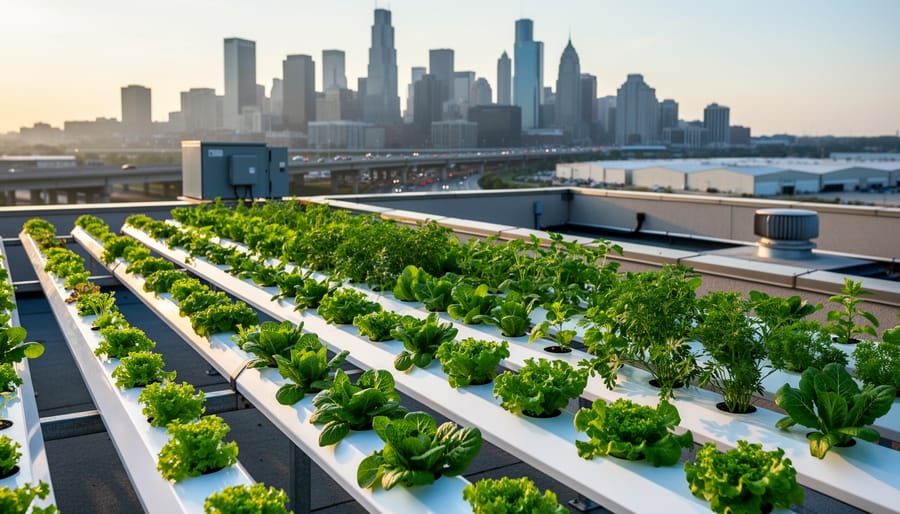
Yet cities across America hold untapped potential to transform how we grow, distribute, and consume food. From rooftops to vacant lots, urban spaces represent millions of square feet that could produce fresh vegetables, reduce transportation emissions, and reconnect communities with their food sources. This isn’t romantic nostalgia for victory gardens, but a practical response backed by emerging technologies in hydroponics, vertical farming, and climate-controlled growing systems.
The shift toward decentralized, urban-integrated food production addresses multiple crises simultaneously: climate resilience, food security, economic development, and community health. Urban agriculture won’t replace traditional farming, but it can supplement it strategically, placing fresh food production exactly where most Americans live and reducing the system’s vulnerability to disruption. The question isn’t whether cities should participate in food production, but how quickly we can scale solutions that already work.
The Current State of US Food Systems: A Reality Check
Let’s be honest: the way most Americans get their food today isn’t working as well as we’d like to think. Your average meal travels about 1,500 miles from farm to plate, passing through multiple distribution centers, processors, and retailers along the way. This complex web of transportation and handling has created a system that’s both remarkably efficient at scale and surprisingly fragile when things go wrong.
The COVID-19 pandemic pulled back the curtain on these vulnerabilities. Remember the empty grocery shelves in March 2020? That wasn’t because we ran out of food; it was because our just-in-time delivery system couldn’t adapt quickly enough when demand patterns shifted. Food rotted in fields while people in cities struggled to find fresh produce. Climate events have only amplified these concerns, from droughts affecting California’s agricultural heartland to extreme weather disrupting transportation routes.
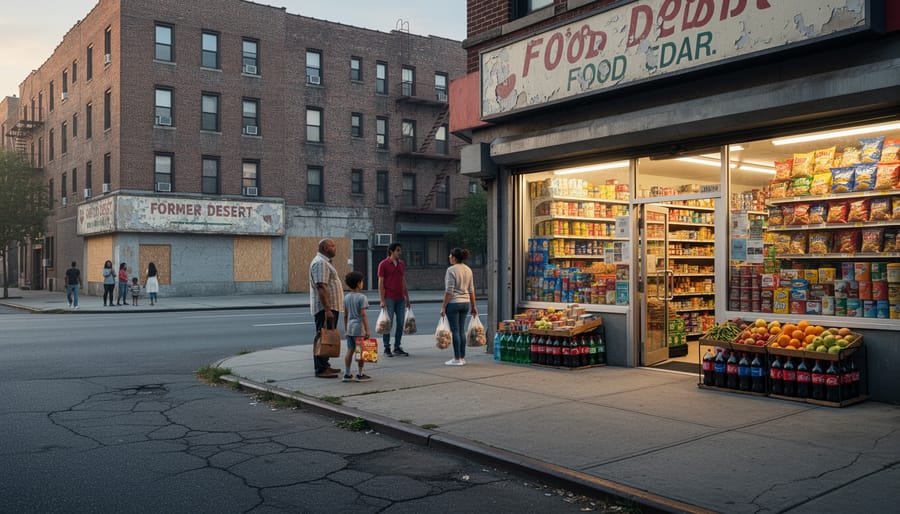
For urban residents, the challenges run even deeper. According to the USDA’s Food Access Research Atlas, millions of Americans live in food deserts—areas where accessing fresh, healthy food requires traveling significant distances. In many city neighborhoods, residents find convenience stores stocked with processed snacks more readily than grocery stores offering fresh vegetables.
Consider these sobering realities about our current food system:
- Food waste accounts for nearly 40% of the US food supply, with most ending up in landfills
- The food system contributes approximately 10% of total US greenhouse gas emissions
- More than 19 million Americans live in food deserts, with limited access to affordable, nutritious food
- The average produce item loses 45% of its nutritional value during the journey from harvest to consumption
The environmental footprint extends beyond carbon emissions. Industrial agriculture relies heavily on chemical inputs, depletes soil health, and consumes massive amounts of water. Meanwhile, cities import nearly all their food from distant rural areas, missing opportunities to utilize valuable urban space for production.
These aren’t just abstract problems for policymakers to solve. They affect your daily life: the quality and freshness of food available in your neighborhood, the resilience of your community when disruptions occur, and the environmental impact of your dietary choices. Understanding these systemic challenges is the first step toward embracing solutions that bring food production closer to where people actually live and eat.
What Food Systems Insight Reveals About Urban Vulnerabilities
Food Systems Insight is essentially detective work for your dinner plate. It’s the practice of tracing and analyzing every step food takes on its journey from farm to fork, and what it reveals about American cities is eye-opening. By mapping out how our meals actually reach us, we can spot the weak points that leave urban communities vulnerable to disruptions.
Here’s the fundamental challenge: most of America’s food is grown far from where most Americans live. The average meal in the United States travels about 1,500 miles before reaching your table. While rural areas produce the bulk of our food, over 80% of Americans now live in urban settings. This geographic disconnect creates a complex web of dependencies on transportation networks, distribution centers, and supply chains that most city dwellers never see or think about.
Cities operate on what experts call “just-in-time” delivery systems. Your local grocery store typically holds only three days’ worth of food inventory. This efficiency works beautifully under normal conditions but becomes a critical vulnerability during disruptions. We saw this reality during the early pandemic when supermarket shelves emptied within hours. Natural disasters, fuel shortages, or transportation breakdowns can quickly leave urban populations with limited food access.
Food Systems Insight also exposes another uncomfortable truth: urban food deserts aren’t accidents of geography. By analyzing distribution patterns, we can see how economic factors, infrastructure decisions, and historical planning have created neighborhoods where fresh, healthy food simply doesn’t flow. Some urban residents live miles from the nearest full-service grocery store, depending instead on corner stores with limited fresh produce options.
The concentration of risk becomes clearer when we examine infrastructure dependencies. Most cities rely on a handful of major distribution hubs. If one fails, the ripple effects spread quickly through entire metropolitan areas. Urban populations also face unique challenges during emergencies since stockpiling fresh food isn’t practical in smaller living spaces typical of city life.
Understanding these vulnerabilities isn’t meant to alarm but to inform. When we recognize how fragile our urban food connections actually are, we can make smarter decisions about strengthening them. This is where innovative solutions like urban agriculture, rooftop farming, and vertical growing systems enter the conversation, offering cities new ways to supplement traditional food systems with locally grown alternatives.
Agritecture: Redesigning Cities One Rooftop at a Time
Why Rooftops Are Untapped Food Goldmines
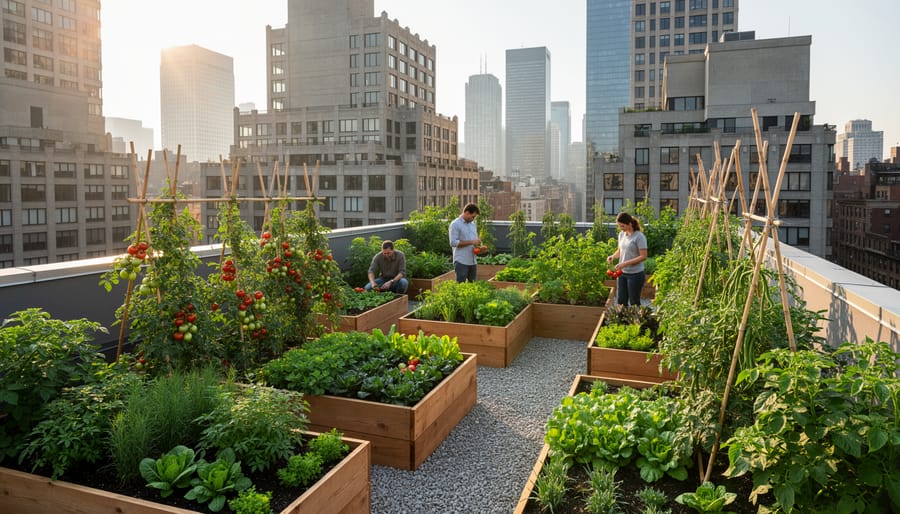
Look up. That’s where the solution might be hiding. America’s cities contain millions of square feet of unused rooftop space—flat, sun-drenched surfaces doing nothing but collecting rain and absorbing heat. Meanwhile, food travels an average of 1,500 miles to reach urban dinner tables, burning fuel and losing nutrients along the way.
Rooftops represent one of the most underutilized resources in our food systems. Converting these barren surfaces into productive gardens addresses multiple urban challenges simultaneously. For starters, vegetated roofs reduce the urban heat island effect that makes cities up to 7 degrees warmer than surrounding areas. Those extra degrees mean higher air conditioning costs and poorer air quality for everyone living below.
Then there’s stormwater. Traditional roofs dump rainfall directly into overtaxed sewer systems, contributing to flooding and water pollution. A rooftop garden acts like a sponge, absorbing and filtering rainwater before it ever reaches the drains. Cities like Philadelphia are already incentivizing green roofs specifically for this stormwater management benefit.
But the food production aspect is what transforms rooftops from environmental amenities into genuine community assets. Hyperlocal doesn’t get more local than the building where you live or work. Rooftop farms eliminate transportation entirely, delivering salad greens from roof to plate in hours, not days.
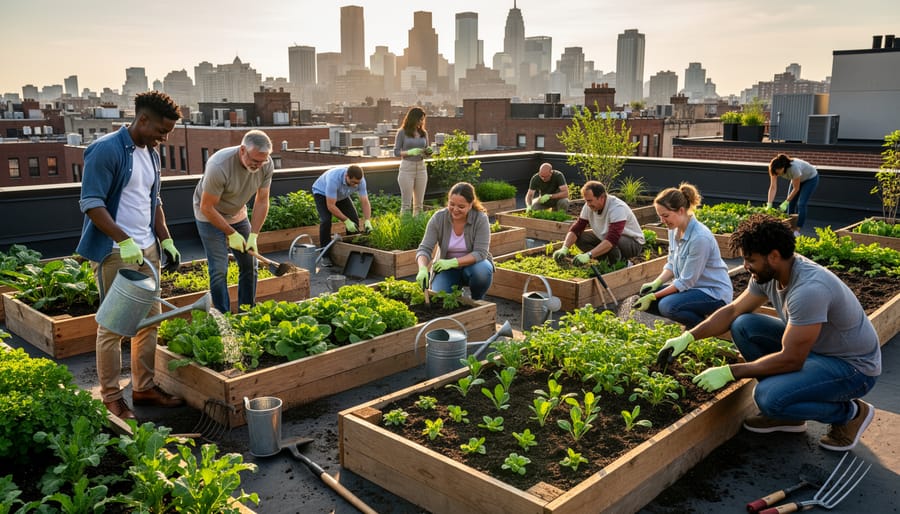
Making this happen requires collaboration between architects who understand structural loads and weatherproofing, green scientists who know soil composition and plant selection, and community members who’ll tend the gardens and share the harvest. No single expert has all the answers. The most successful rooftop projects bring diverse knowledge together, combining technical precision with grassroots enthusiasm to create resilient food sources right where people need them most.
From Concrete to Crops: The Transformation Process
Transforming concrete into crops might sound like an intimidating undertaking, but the reality is more approachable than you’d think. The basic process follows a logical sequence that teams across the country have refined into a reliable formula.
Start with assessment. Before anything goes into the ground, professionals evaluate structural integrity—can your rooftop or parking lot handle the additional weight of soil, water, and plants? This typically involves an engineer’s review, which sounds expensive but often costs less than a kitchen renovation. Many buildings, especially those constructed in recent decades, already have the capacity.
Next comes waterproofing and drainage design. This step prevents water damage while ensuring plants get adequate moisture without creating pooling issues. Modular systems have made this significantly easier, with pre-designed trays and containers that simply click into place.
The growing medium itself isn’t typical garden soil—it’s a lighter engineered mix that provides nutrients while reducing weight by up to 50%. These substrates are specifically formulated for rooftop conditions, handling temperature extremes and wind exposure better than traditional dirt.
Installation can happen surprisingly quickly. A modest rooftop garden might take just a few days to install with a small team, while larger commercial operations scale up accordingly. The beauty of modern urban agriculture systems is their modularity—you can start small with a 200-square-foot test plot and expand based on results.
Maintenance requirements vary, but automated irrigation systems and drought-resistant plant selections minimize daily demands. Many successful urban farms operate with part-time staff, proving that productive doesn’t have to mean labor-intensive.
The Ripple Effects: How Local Food Systems Transform Communities
When communities invest in local food systems, they’re not just growing vegetables—they’re cultivating transformation that touches every aspect of urban life. The benefits cascade far beyond the harvest basket, creating positive change that addresses some of our cities’ most pressing challenges.
Consider what happens when a rooftop farm launches in a neighborhood. Yes, fresh produce starts flowing to nearby residents. But simultaneously, something more profound occurs: neighbors who previously passed each other anonymously begin collaborating around planting schedules and harvest days. These green spaces become gathering points where apartment dwellers finally meet, where intergenerational knowledge exchange happens naturally, and where the social fabric of urban areas strengthens one conversation at a time.
The mental health benefits deserve special attention. Working with soil and plants provides what researchers call “green therapy”—a proven antidote to urban stress and anxiety. Community members involved in urban agriculture report improved mood, reduced depression symptoms, and a renewed sense of purpose. There’s something deeply healing about nurturing life in concrete jungles, about witnessing seeds transform into sustenance through your own efforts.
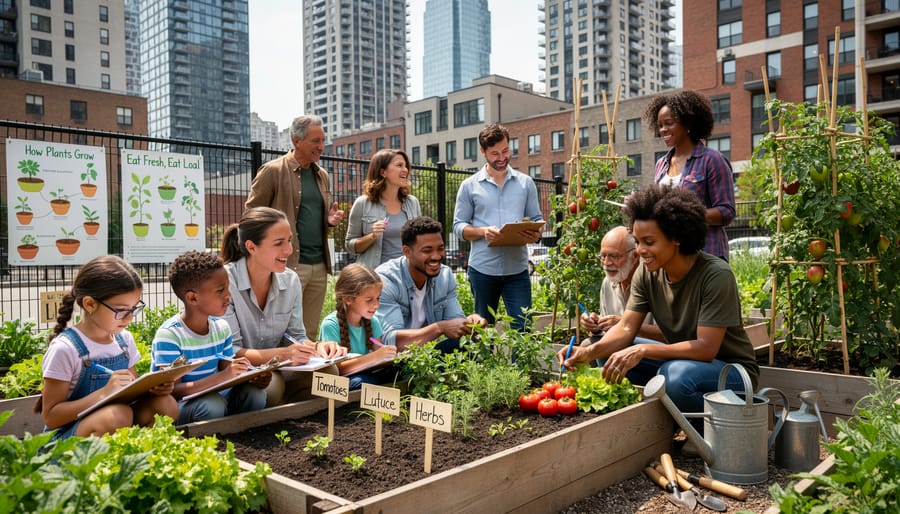
Educational opportunities flourish within these systems too. Schools partnering with rooftop farms create hands-on STEM learning that no textbook can match. Kids learn biology through composting, math through garden plot calculations, and ecology through understanding pollinator relationships. Professional development opportunities emerge as well, with green job training programs teaching skills in hydroponic systems management, sustainable agriculture techniques, and urban landscape design.
| Dimension | Traditional Food System | Urban Agritecture |
|---|---|---|
| Environmental Impact | High transportation emissions, large land footprint | Minimal transport, utilizes unused vertical space |
| Community Connection | Separated from production process | Direct participation and neighborhood collaboration |
| Food Freshness | Days to weeks from harvest | Hours from harvest to table |
| System Resilience | Vulnerable to single-point failures | Distributed, locally controlled production |
| Educational Value | Limited public visibility | Accessible living classroom environments |
Economic development follows naturally. Local food enterprises create jobs that can’t be outsourced—from farm managers to distribution coordinators. Money spent on locally-grown food circulates within the community rather than disappearing into distant corporate supply chains, multiplying the economic benefit through what economists call the local multiplier effect.
Environmental restoration happens too. Green roofs absorb stormwater, reducing urban flooding. Plants filter air pollutants and combat the heat island effect. Native pollinator gardens support biodiversity even in dense metropolitan areas.
The beauty of strengthening local food systems lies in this multiplication effect: one intervention addressing housing, health, education, economy, and environment simultaneously. That’s not just efficient urban planning—it’s transformative community development that reimagines what cities can become.
Getting Started: Practical Steps for Urban Dwellers
Ready to transform your relationship with food? Whether you’re starting from scratch or already nurturing a few herbs on your windowsill, there’s a meaningful way to participate in reshaping our food systems right from your urban home.
If you’re just beginning, start with what you have. A sunny balcony or even a bright window can support a small container garden growing lettuce, tomatoes, or fresh herbs. These starter crops require minimal space but deliver maximum impact on your understanding of food production. Many urban dwellers discover that growing just a handful of their own vegetables fundamentally changes how they think about where food comes from and what it takes to produce it. Community gardens offer another excellent entry point, providing shared space, tools, and collective knowledge while building connections with neighbors who share your interest in local food.
For those ready to scale up, consider rallying your building community around shared growing spaces. Rooftop gardens and vertical growing systems can transform unused areas into productive food sources. Start by approaching your building manager or homeowners association with a simple proposal highlighting benefits like reduced energy costs from green roofs, improved air quality, and community engagement. Professional teams specializing in urban agriculture design can help assess your space’s potential and create systems that work within your building’s structural constraints and local regulations.
City-level engagement amplifies individual efforts exponentially. Attend local planning meetings to advocate for urban agriculture zoning reforms, tax incentives for green infrastructure, or community composting programs. Many cities have established urban agriculture task forces seeking resident input. Join one, or if your city lacks such infrastructure, work with local nonprofits to establish these frameworks. Support farmers markets and community-supported agriculture programs that connect urban consumers with regional growers, strengthening the broader local food network.
Remember, every action counts. The person growing basil on their fire escape and the advocate pushing for citywide food policy are both essential parts of building resilient urban food systems. Choose your starting point based on your current capacity, but don’t stop there. As you gain confidence and knowledge, expand your involvement. The transformation of our food systems depends on millions of small actions adding up to systemic change.
Understanding US food systems through platforms like Food Systems Insight reveals both the challenges we face and the opportunities before us. The vulnerabilities in our current infrastructure—from climate pressures to supply chain disruptions—aren’t reasons for despair. They’re invitations to reimagine how we nourish ourselves and our communities.
The path forward isn’t about replacing rural farms with rooftop gardens or abandoning the agricultural heritage that feeds millions. Instead, it’s about creating complementary systems that work in harmony. Urban agriculture doesn’t compete with traditional farming; it enhances food security by diversifying where and how we grow, reducing transportation dependencies, and reconnecting city dwellers with their food sources.
Every rooftop garden, vertical farm, and community growing space represents more than fresh produce. These projects transform concrete jungles into living, productive ecosystems that cool cities, manage stormwater, clean air, and build resilient communities. When professional teams collaborate with city planners and residents to integrate agriculture into urban design, we’re not just solving food problems—we’re reimagining what cities can be.
The knowledge you’ve gained about food systems becomes powerful when paired with action. Your balcony, rooftop, or neighborhood has potential waiting to be unlocked. By embracing urban agriculture, you’re participating in a transformation that makes our food systems stronger, our cities greener, and our communities more connected. The future of food isn’t just rural or urban—it’s both, working together to nourish a changing world.
