
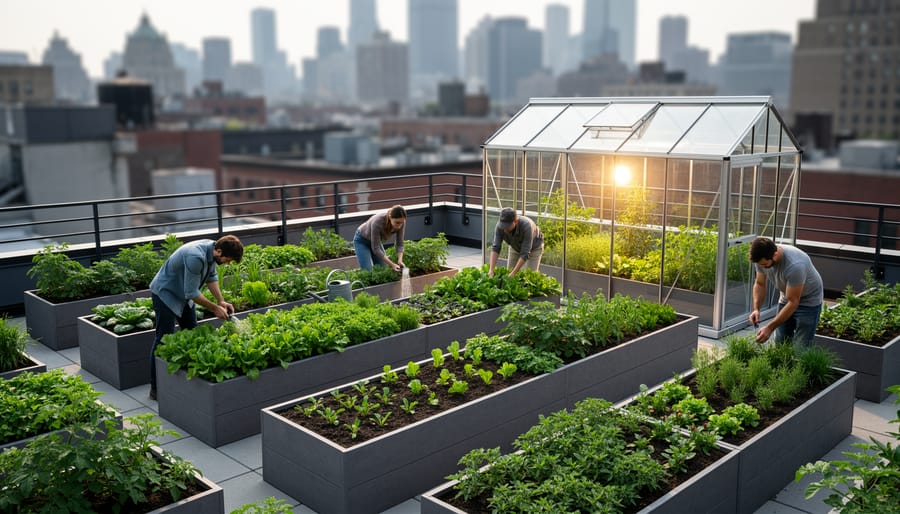
Urban agriculture examples are real-world projects where cities produce food within their boundaries, ranging from rooftop farms and vertical gardens to community plots and hydroponic warehouses. These aren’t experimental concepts anymore. Cities worldwide have proven that growing food locally reduces transportation costs, improves food security, and transforms underused spaces into productive green infrastructure.
The question isn’t whether urban agriculture works. It does. The question for most readers is which model fits their context, whether you’re a homeowner eyeing your flat roof, a community organizer looking to activate a vacant lot, or a city planner drafting sustainability policy. Each approach solves different problems and requires different resources, but all share a common thread: they turn the logic of industrial agriculture inside out by bringing production closer to consumption.
This article walks through concrete examples that demonstrate the diversity of urban farming. You’ll see how Singapore stacks farms vertically to overcome land scarcity, how Detroit converts abandoned buildings into food hubs, and how Paris integrates agriculture into its urban design at the policy level. These case studies reveal not just what’s possible, but how different cities adapted urban agriculture to their unique constraints, from climate and available space to economic models and community needs.
We’ve organized these examples by approach, whether soil-based, hydroponic, aquaponic, or hybrid systems, because understanding the operational differences helps you identify which models apply to your situation. Some require significant capital investment and technical expertise. Others thrive on community volunteers and low-cost infrastructure. By the end, you’ll have a practical sense of what urban agriculture looks like in practice and the variety of pathways cities are taking to grow food where people actually live.
What Is Urban Agriculture?
Urban agriculture is the practice of growing food within city limits transforming rooftops, vacant lots, and unused spaces into productive growing areas. It goes beyond a backyard vegetable patch. We’re talking about systematic food production, processing, and distribution that happens right where people live and work.
The distinction between traditional gardening and urban agriculture lies in scope and intention. A home garden grows tomatoes for one family. Urban agriculture operates at a larger scale, designed to serve communities, contribute to local food systems, and integrate with city infrastructure. It’s planned, often commercial or community-focused, and addresses challenges unique to dense urban environments.
These systems pursue three interconnected goals. First, they tackle urban agriculture and food security bringing fresh produce to neighborhoods where grocery stores are scarce. Second, they advance environmental sustainability through reduced transportation emissions, stormwater management, and improved air quality. Third, they strengthen communities by creating gathering spaces, educational opportunities, and local jobs.
Making all this work requires more than good intentions. Enter agritecture, the design framework that integrates agriculture with urban architecture. This approach treats food production as a fundamental part of city design, not an afterthought. Agritecture teams bring together architects, green scientists, engineers, and urban planners who understand both plants and city systems.
- Urban Agriculture
- Food production, processing, and distribution activities located within city boundaries, designed to integrate with urban infrastructure and serve local populations.
- Agritecture
- The design discipline that integrates agricultural systems with urban architecture, combining expertise in building design, plant science, and city planning to create viable urban food production spaces.
- Food Desert
- Urban areas where residents lack access to affordable, nutritious food, typically defined as being more than a mile from a grocery store in cities.
- Controlled Environment Agriculture (CEA)
- Growing systems that regulate light, temperature, humidity, and nutrients to optimize plant growth year-round, regardless of outdoor conditions.
This framework addresses real constraints: limited space, contaminated soil, water scarcity, zoning regulations, and the need for year-round production. Successful urban agriculture doesn’t fight the city. It works with urban realities, turning challenges into design opportunities that benefit both plants and people.
How Urban Agriculture Works
Urban agriculture succeeds when it’s designed as an integrated system rather than simply transplanting rural farming into cities. These projects must account for weight loads on buildings, limited water access, varying sunlight patterns throughout the day, and the compact nature of urban environments. A rooftop farm, for example, requires structural analysis to ensure the building can support soil weight, irrigation systems, and seasonal snow loads, considerations that disappear on open farmland.
The design process starts with feasibility assessment. Professional teams evaluate available space, orientation for sunlight exposure, access to water sources, and local zoning requirements. Architects calculate structural capacity, while green scientists analyze growing medium options that balance nutrition with weight constraints. Urban planners examine how the farm connects to surrounding neighborhoods and food distribution networks. This collaboration happens before a single seed gets planted.
Resource management differs significantly from conventional agriculture. Water systems often use closed-loop irrigation that recycles runoff, reducing consumption by 70-90% compared to traditional farming. Growing mediums range from lightweight soil mixes to soilless hydroponics, chosen based on structural limits and crop requirements. Lighting strategies combine natural sunlight with targeted supplemental LED systems for year-round production, particularly in vertical or indoor configurations.
Integration with communities determines whether urban farms thrive or become abandoned novelties. Successful projects create access points for residents, through volunteer programs, educational workshops, or direct produce sales. They address real neighborhood needs, whether that’s fresh food access in underserved areas, green space for recreation, or job training opportunities. The farms become neighborhood assets rather than isolated experiments.
Scale flexibility makes urban agriculture adaptable. A small community garden operates differently than a commercial vertical farm, yet both follow the same principles: work within urban constraints, optimize resource use, and serve local populations. The operational model scales up or down, but the underlying design thinking remains constant. Professional teams customize solutions for each site’s unique conditions, budget, and goals rather than applying one-size-fits-all templates.
Types and Components of Urban Agriculture Systems
Space-Based Types
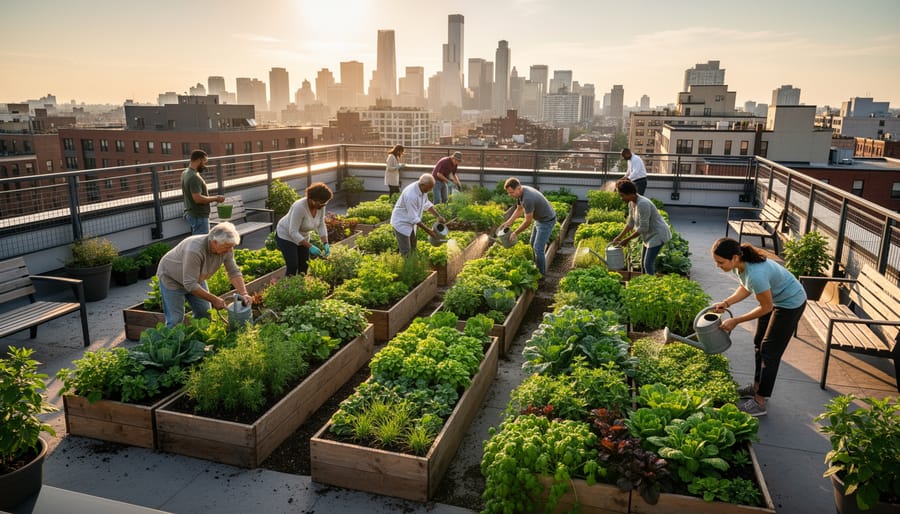
Urban space comes at a premium, but the beauty of urban agriculture lies in its adaptability. Cities contain dozens of underutilized spaces, rooftops, walls, balconies, empty lots, that can become productive growing areas once you match the right approach to the available footprint.
Rooftop farms transform otherwise idle surfaces into productive landscapes. A properly engineered rooftop can support extensive growing beds, from lightweight soil systems to container arrays. These elevated farms capture abundant sunlight while providing insulation benefits to the buildings below. They work especially well on flat commercial roofs where structural capacity allows for soil weight and irrigation infrastructure.
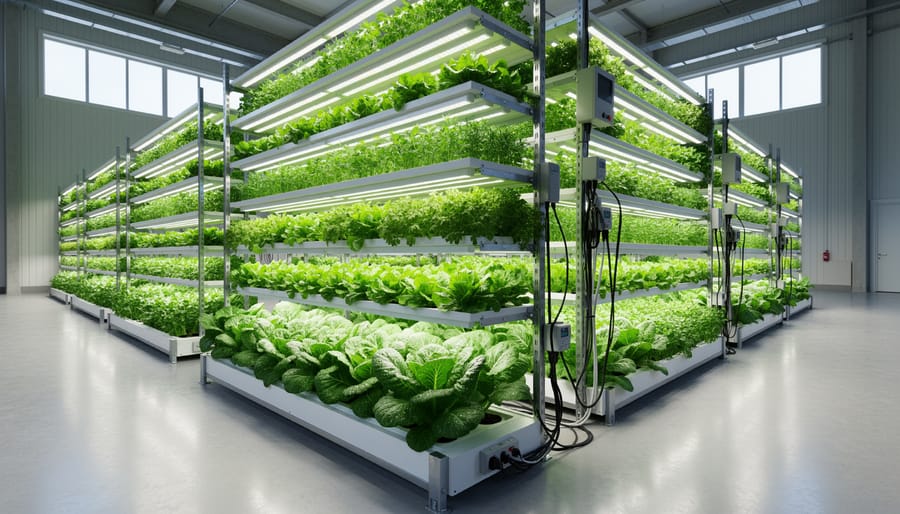
Vertical farms take advantage of height rather than footprint, stacking growing layers in warehouses, shipping containers, or purpose-built structures. By controlling light, temperature, and nutrients in enclosed spaces, vertical operations produce crops year-round regardless of weather. This approach suits leafy greens and herbs particularly well, delivering consistent harvests in compact urban parcels where horizontal space is scarce or expensive.
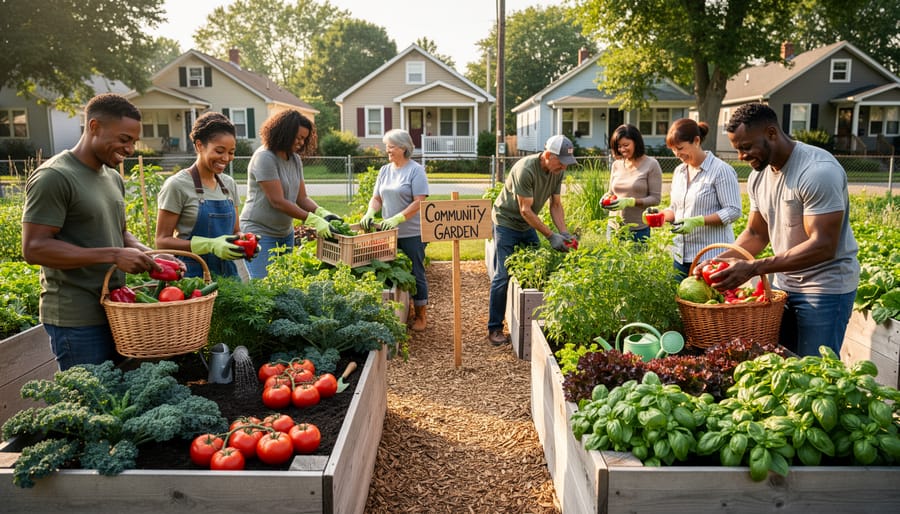
Community gardens convert vacant lots and underused parks into shared growing spaces managed by neighborhood groups. These gardens prioritize accessibility and education over maximum yield, offering individual plots where residents learn gardening skills and build social connections. They thrive in neighborhoods with engaged communities and available land, often requiring minimal infrastructure beyond water access and basic fencing.
- Balcony and container gardens: Perfect for apartment dwellers with limited square footage
- Vacant lot conversions: Transform blighted properties into neighborhood food hubs
- Wall-mounted systems: Utilize vertical surfaces on building exteriors or interior atriums
- Parking lot retrofits: Replace underutilized asphalt with raised bed installations
The key is matching scale to resources. A fifth-floor balcony won’t feed a neighborhood, but twenty balconies growing tomatoes and peppers create meaningful impact. Similarly, a single vacant lot might become either a community garden serving fifty families or an intensive market garden supplying local restaurants. The space dictates the model, but every square foot counts when cities get serious about local food production.
Technology-Driven Systems
Technology transforms how cities grow food by removing traditional agricultural constraints. These systems allow urban farmers to produce crops year-round, regardless of outdoor weather or soil quality, while using significantly less water and space than conventional farming.
Hydroponics grows plants in nutrient-rich water solutions rather than soil. Roots receive precisely calibrated minerals dissolved in water, eliminating the need for arable land. This approach uses up to 90% less water than soil-based farming because the system recirculates rather than drains away. Urban hydroponic setups range from small kitchen herb gardens to warehouse-scale operations producing thousands of pounds of lettuce weekly. The controlled nutrient delivery accelerates growth cycles, meaning faster harvests and higher annual yields per square foot.
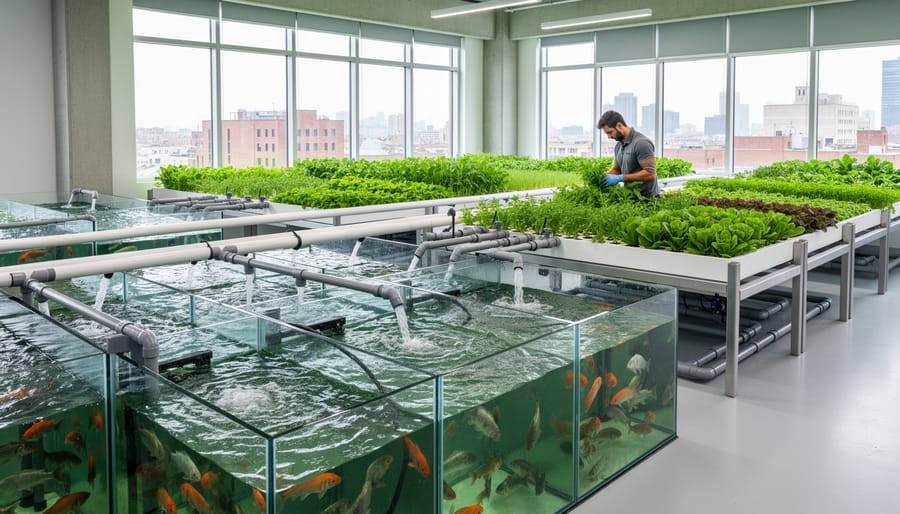
Aquaponics combines fish farming with plant cultivation in a symbiotic loop. Fish waste provides natural fertilizer for plants, while plants filter and clean water that returns to fish tanks. This closed-loop system produces both protein and vegetables simultaneously, making it particularly space-efficient for cities. A well-designed aquaponics facility can yield tilapia or catfish alongside leafy greens and herbs, creating diverse food outputs from one integrated system.
Aeroponics suspends plant roots in air and mists them with nutrient solution. This maximizes oxygen exposure to roots, promoting even faster growth than hydroponics. The system uses minimal water and allows for vertical stacking, which urban farmers exploit to grow multiple layers of crops in tight spaces.
Controlled environment agriculture encompasses these technologies within climate-managed facilities. LED grow lights calibrated to specific wavelengths, temperature controls, and humidity management create optimal growing conditions regardless of season. These systems produce consistent yields every week of the year, insulating cities from weather disruptions and seasonal gaps in fresh produce availability.
Integration Models
Building-integrated agriculture represents the most ambitious form of urban farming: structures designed from the ground up to produce food as part of their core function. These projects might incorporate growing zones into facades, atriums, or dedicated floors, treating agriculture not as an add-on but as integral infrastructure. The Pasona Urban Farm in Tokyo, for instance, dedicates over 43,000 square feet across its office building to rice paddies, tomato gardens, and herb walls that feed employees while regulating indoor climate.
Commercial urban farms operate as for-profit businesses, supplying restaurants, grocery stores, and direct consumers with hyper-local produce. Unlike community gardens, these ventures prioritize efficiency and market viability, often using advanced growing systems to achieve yields that justify urban real estate costs. They create jobs, reduce food miles to near-zero, and demonstrate that agriculture can compete economically in high-value urban space.
Institutional farms at schools, hospitals, and universities serve dual purposes: producing fresh food for their communities while advancing education, research, or patient wellness programs. A hospital rooftop farm might supply its cafeteria while offering therapeutic gardening for patients. School gardens teach science and nutrition while offsetting cafeteria costs.
Hybrid public-private partnerships blend government support with private innovation, a city might provide land or infrastructure while operators handle farming expertise and market development. These models spread risk, leverage diverse strengths, and often create community benefits beyond food production alone.
Key Components Across All Types
Every urban agriculture system, regardless of type or scale, depends on five essential components working together.
Growing systems provide the foundation, whether soil-based beds, hydroponic channels, or aeroponic towers. The choice affects water needs, maintenance requirements, and crop possibilities.
Water management ensures efficient delivery and recovery. Drip irrigation, recirculation systems, and rainwater harvesting minimize waste while maintaining consistent moisture levels that urban crops require.
Lighting combines natural sunlight with LED supplementation when needed. South-facing exposures maximize free solar energy, while controlled environments use spectrum-specific lights to extend growing seasons.
Climate control regulates temperature and humidity through passive design (ventilation, shading) or active systems (HVAC, fans). Urban microclimates offer both challenges and advantages here.
Distribution channels connect harvest to consumers, whether through on-site sales, CSA programs, or partnerships with local restaurants and markets. Without distribution, even productive systems fail to deliver impact.
12 Urban Agriculture Examples Transforming Cities
Rooftop Farm Examples
Brooklyn Grange in New York City operates the world’s largest rooftop soil farms, spanning 5.6 acres across three locations. Their flagship Navy Yard site produces over 50,000 pounds of organic vegetables annually while serving as an event space and educational hub. The design incorporates lightweight growing medium engineered to support plant health without overloading building structures, plus integrated irrigation systems that capture and recycle stormwater. Beyond food production, the farms reduce building cooling costs by 30% during summer months and provide habitat for urban pollinators.
Lufa Farms in Montreal demonstrates year-round rooftop agriculture in a harsh northern climate. Their 43,000-square-foot greenhouse atop a commercial building uses hydroponic systems to grow leafy greens, tomatoes, and herbs twelve months a year, producing enough food to supply 2,000 weekly baskets to local residents. The controlled environment design allows precise climate management despite outdoor temperatures ranging from -30°C to 30°C, while thermal mass from the building below reduces heating needs.
Uncommon Ground in Chicago pioneered the certified organic rooftop farm on a restaurant, growing produce served directly to diners below. This 2,500-square-foot installation shows how even modest rooftop spaces can create circular food systems within buildings. The farm supplies roughly 25% of the restaurant’s seasonal vegetable needs while engaging customers through visible agriculture and educational tours, proving that rooftop farms work at neighbourhood scale, not just industrial operations.
Vertical Farming in Action
AeroFarms in Newark, New Jersey operates one of the world’s largest indoor vertical farms in a converted steel mill. The facility uses aeroponics, growing plants in air with nutrient mist, to produce leafy greens using 95% less water than field farming. Stacked growing systems reach 30 feet high, and LED lighting tuned to specific wavelengths maximizes photosynthesis while minimizing energy use. The controlled environment eliminates pesticide needs and enables harvest cycles as short as 12-16 days, producing yields 390 times greater per square foot annually than conventional agriculture. Year-round production means consistent supply to local retailers regardless of weather.
Singapore’s Sky Greens pioneered the world’s first low-carbon hydraulic-driven vertical farm in 2012, and the model continues expanding across the island nation. These aluminum tower structures, reaching up to nine meters tall, use a patented rotating system that moves vegetable troughs through optimal light zones while gravity-fed water flows provide irrigation. The hydraulic rotation requires minimal electricity, roughly the power of one lightbulb per tower. In a land-scarce city-state importing over 90% of its food, Sky Greens produces a ton of vegetables every other day, supplying major supermarket chains while using just 5% of the water traditional farms require.
Infarm, operating across major European cities, takes a distributed approach by installing modular vertical farms directly inside grocery stores and restaurants. These climate-controlled growing units, typically 2-4 square meters, produce herbs and greens harvested on-site for immediate sale.
Community-Driven Gardens
Community gardens transform underutilized urban land into vibrant food-producing spaces that strengthen neighborhood bonds while addressing food access. These gardens prioritize participation, education, and shared ownership rather than maximum yield, creating social infrastructure as valuable as the vegetables they produce.
In Detroit, the Michigan Urban Farming Initiative converted a two-acre vacant lot into a thriving community resource center that produces over 50,000 pounds of food annually, all distributed free to neighbors within two miles. The project integrates raised beds, a sensory garden, and an urban agriculture campus where residents learn composting, season extension techniques, and crop planning. Weekly volunteer sessions bring together diverse age groups and backgrounds, rebuilding social connections in a neighborhood that lost density through decades of depopulation.
Seattle’s P-Patch program manages 89 community gardens across the city, reserving plots specifically for low-income residents, refugees, and immigrant communities. The Rainier Beach Urban Farm and Wetlands demonstrates this model’s potential: 3,000 square feet of intensive vegetable production sits alongside native plantings and educational spaces. Hmong, Vietnamese, and Somali gardeners grow culturally significant crops rarely available in mainstream grocery stores, maintaining food traditions while contributing to neighborhood food security.
These gardens succeed because they’re designed for people first, production second, building community capacity that extends well beyond the growing season.
Innovative Hybrid Models
Singapore’s Sky Greens vertical farm pioneered a hydraulic-driven rotating system that grows vegetables in aluminum A-frame towers reaching up to nine meters high. The rotation ensures every plant receives equal sunlight exposure throughout the day, eliminating the need for artificial lighting. This low-energy approach produces roughly one ton of vegetables every two days on less than a hectare of land, demonstrating that innovation doesn’t always mean high-tech complexity.
In Milwaukee, Growing Power transformed a former industrial site into an aquaponics facility producing 150,000 pounds of food annually. The system combines tilapia farming with hydroponic vegetable production: fish waste provides nutrients for plants, and plants filter water that returns to the fish tanks. Beyond food production, the facility runs training programs teaching urban farming skills to underserved communities, proving that hybrid models can address both food access and economic opportunity simultaneously.
The Edible Schoolyard in Berkeley integrated a one-acre organic garden directly into a middle school’s curriculum. Students plant, maintain, and harvest crops as part of science, nutrition, and cooking classes. What started as a single school program has influenced dozens of similar projects nationwide, showing how educational institutions can become production sites while teaching food literacy.
Boston’s Underground at Ink Block converted a 26,000-square-foot former trolley repair facility beneath street level into a hydroponic farm growing leafy greens year-round. The controlled environment maintains consistent temperatures using minimal heating, and LED lighting runs on renewable energy. Restaurants receive harvests within hours, eliminating transportation emissions entirely. The project demonstrates how cities can repurpose forgotten infrastructure rather than building new structures.
These hybrid approaches share a common thread: they solve multiple urban challenges at once, food production, education, waste management, and community engagement, through creative spatial thinking.
Lessons from These Examples
Looking across these twelve projects, several patterns emerge. Successful urban agriculture integrates with existing infrastructure rather than fighting it, rooftops become productive assets, warehouses gain second lives, schools double as learning labs. The most resilient systems address water and energy efficiency from day one, not as afterthoughts. Community buy-in matters as much as technical design; projects that involve residents early, through workshops or co-design sessions, sustain themselves longer. Professional collaboration between architects, horticulturists, and urban planners consistently separates thriving farms from failed experiments. Finally, these examples prove that urban agriculture works at any scale: a single balcony garden and a commercial vertical farm both contribute to more sustainable, food-secure cities when designed thoughtfully.
Uses and Benefits of Urban Agriculture
The examples we’ve explored reveal why urban agriculture has moved from experimental novelty to strategic priority for cities worldwide. These systems deliver tangible benefits that extend far beyond simply growing food, creating value across environmental, economic, social, and health dimensions.
Food production stands as the most obvious benefit, yet its impact reaches deeper than yield numbers suggest. Urban farms produce fresh vegetables, herbs, and fruits within miles, sometimes feet, of where people eat them. This proximity means produce reaches tables at peak nutritional value rather than after days in transit. For neighborhoods classified as food deserts, where grocery stores offering fresh produce are scarce, even small-scale urban agriculture can transform access to healthy food. Community gardens and rooftop farms aren’t replacing industrial agriculture, but they’re creating resilient, supplementary food sources that buffer communities against supply chain disruptions.
The environmental contributions solve multiple urban challenges simultaneously. Green roofs and vertical farms absorb stormwater that would otherwise overwhelm drainage systems, reducing flood risk and water pollution. Vegetation cools surrounding areas through evapotranspiration, directly countering the urban heat island effect that makes cities several degrees warmer than rural areas. Plants filter air pollutants and capture carbon dioxide, improving air quality in neighborhoods that typically suffer the worst pollution exposure. These aren’t minor effects, a well-designed rooftop farm can reduce building energy costs by 20 to 30 percent through natural insulation.
- Environmental: Stormwater absorption, urban cooling, air quality improvement, carbon sequestration
- Social: Community building, food education, skill development, cultural food preservation
- Economic: Local job creation, reduced transportation costs, property value increases, new revenue streams
- Health: Improved nutrition access, physical activity, mental health benefits, therapeutic applications
Economic opportunities emerge at every scale. Commercial urban farms create jobs in production, distribution, and farm management, employment that stays local rather than concentrating in rural areas. Reduced food miles mean lower transportation costs and smaller environmental footprints. Property developers have discovered that buildings with integrated agriculture command premium rents and sales prices, turning green infrastructure into a competitive advantage.
The social and health dimensions often prove most transformative for participants. Urban agriculture projects become gathering spaces where neighbors meet, share knowledge, and build social networks that strengthen community resilience. Educational programs connect children and adults to food sources, teaching nutrition, biology, and sustainability through hands-on experience. Gardening provides physical exercise without feeling like a workout, while the combination of outdoor activity, purposeful work, and watching plants grow delivers documented mental health benefits. Therapeutic horticulture programs in hospitals and care facilities use urban agriculture to support recovery and wellbeing, demonstrating that these spaces heal in multiple ways.
Cities invest in urban agriculture because it addresses urgent challenges, food security, climate adaptation, public health, economic development, through integrated solutions rather than single-purpose programs.
Getting Started with Urban Agriculture
Getting started with urban agriculture doesn’t require transforming an entire city block overnight. The most successful projects begin with realistic goals matched to available resources and expertise.
For urban residents, the simplest entry point is container gardening on a balcony or windowsill. A few pots of herbs, lettuce, or cherry tomatoes teach fundamental growing principles without major investment. From there, joining an established community garden offers hands-on experience alongside experienced growers who can answer questions and share tools. Many cities maintain waiting lists for garden plots, so apply early and use the interim to attend workshops on urban growing techniques, soil health, and season extension methods.
City planners and developers face more complex considerations but also greater potential impact. Before designating space for urban agriculture, conduct thorough feasibility studies that assess structural capacity for rooftop farms, zoning compliance, water access, and long-term maintenance responsibilities. Consult with agritecture professionals who understand both agricultural requirements and building systems. These experts can evaluate whether a proposed site can support the weight of growing media and water, how to integrate irrigation without damaging waterproofing, and what climate control adaptations might extend growing seasons. Skip this upfront assessment and you risk expensive failures that discourage future initiatives.
Communities advocating for urban agriculture should document local need, identify potential sites, and build coalitions across neighborhood groups, schools, and local businesses. Present city councils with specific proposals rather than general concepts. Successful advocacy often combines environmental benefits with concrete economic and social outcomes: job creation, educational opportunities, improved food access in underserved areas.
Regardless of your starting point, begin with what you can manage well rather than overcommitting. A thriving 200-square-foot rooftop garden inspires expansion better than an abandoned half-acre lot ever will. Seek mentorship, whether from experienced urban farmers, extension services, or professional consultants who’ve navigated similar projects in comparable urban contexts.
Common Questions About Urban Agriculture
Is urban agriculture really economically viable, or is it just an expensive hobby? That’s usually the first question people ask when they see a vertical farm or rooftop garden. The honest answer depends on your goals and scale. Small personal setups typically save money on groceries while providing better produce quality, though they rarely “pay for themselves” if you count setup costs and time. Community gardens break even or run modest surpluses through membership fees and produce sales. Commercial operations face tighter margins but can achieve profitability through premium pricing, direct-to-consumer sales, year-round production, and diversified revenue (education programs, consulting, tours). The Brooklyn Grange rooftop farms, for example, became profitable within a few years by combining production with events and education.
How much space do I actually need to start urban farming?
You can start with as little as a sunny windowsill for herbs or a small balcony for container vegetables. A productive balcony garden needs just 20-30 square feet, while a family of four can grow meaningful supplemental produce in 100-200 square feet using vertical techniques and succession planting.
What about soil contamination in cities, is it safe to grow food?
Soil contamination is a legitimate concern in older urban areas, particularly near former industrial sites or heavily trafficked roads. The solution is testing first (cost about $50-150 through extension offices), then using raised beds with clean soil, containers, or soilless systems like hydroponics if contamination is present.
Can urban farms really make a difference in food security?
Urban agriculture alone won’t replace industrial food systems, but it meaningfully improves local food access, especially in underserved neighborhoods. Detroit’s urban farms produce over 200 tons of food annually, while reducing transportation costs and providing fresh options where grocery stores are scarce.
Do I need special permits to grow food in the city?
Permits depend on scale and location. Personal gardens and containers rarely need approval, but rooftop installations, commercial operations, water system modifications, and sales typically require permits. Check with your city’s planning and health departments before investing significantly.
What if I don’t have gardening experience?
Most successful urban farmers started as beginners. Community gardens offer mentorship, local extension offices provide free classes, and many urban agriculture organizations run workshops. Starting small with forgiving crops like herbs, leafy greens, and tomatoes builds confidence before tackling more complex systems.
How do I deal with limited sunlight in a dense city?
Low-light conditions favor leafy greens, herbs, and microgreens, which need only 3-4 hours of direct sun. For sun-loving crops like tomatoes and peppers, supplemental LED grow lights have become affordable and energy-efficient, or consider joining a community plot with better sun exposure.
The maintenance question comes up frequently too. Urban agriculture does require consistent attention, but the time commitment varies wildly. Container gardens need 15-30 minutes daily for watering and checking, while automated hydroponic systems can run for days with minimal intervention once properly configured. Community gardens typically ask members for 2-4 hours weekly. The learning curve is real, but most people find the rhythm becomes second nature after the first growing season.
Weather and climate challenges feel more manageable than people expect. Cities actually create microclimates that moderate temperature extremes, the “urban heat island effect” extends growing seasons by two to three weeks on average. Balconies and courtyards offer wind protection, and even simple cold frames or row covers push production well into winter for hardy crops. The key is matching your approach to your specific conditions rather than fighting them.
The examples you’ve seen aren’t isolated experiments, they’re part of a fundamental shift in how cities think about food, space, and resilience. From Singapore’s vertical farms producing tons of leafy greens to Detroit’s community gardens reclaiming vacant lots, urban agriculture has moved beyond proof of concept. It works, it scales, and cities worldwide are embedding it into their infrastructure planning.
What makes these projects succeed isn’t just enthusiasm. It’s thoughtful agritecture: design strategies that account for structural loads, water systems, microclimates, and community needs from day one. Professional teams, architects working alongside green scientists and urban planners, transform good intentions into productive, lasting systems.
Your role in this transformation depends entirely on your context. Perhaps you start with herbs on a balcony, understanding firsthand how cities can grow food. Maybe you’re a planner who can advocate for rooftop agriculture in new developments, or a community organizer ready to convert that empty lot. Both matter. Large-scale vertical farms expand urban food production capacity; individual container gardens shift mindsets and build skills. The movement needs both.
The cities leading this change didn’t wait for perfect conditions. They started with feasibility assessments, adapted designs to their constraints, and learned as they built. If you’re ready to move from inspiration to action, whether that’s a building-integrated farm or understanding what’s possible for your neighborhood, professional consultation turns vision into concrete plans. The infrastructure is here. The question is where you’ll apply it.
