
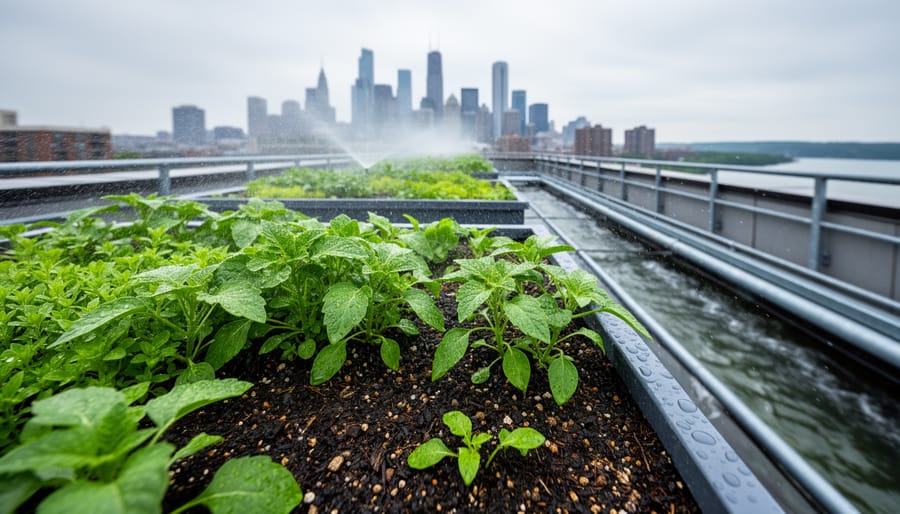
Every time you spray a pesticide in your garden, you’re making a choice that ripples far beyond your raised beds. These chemical compounds don’t stay put. They drift on the wind, seep into groundwater, and hitch rides on pollinators visiting your plants. What starts as a quick fix for aphids on your rooftop tomatoes can end up disrupting entire urban ecosystems, affecting everything from soil microbes to the birds nesting in nearby trees.
The environmental story of pesticides isn’t simple. We’re talking about thousands of different compounds, each with its own chemical behavior and biological targets. Some break down in days. Others persist for years, accumulating in soil and water where they interfere with organisms you never intended to harm. In 2026, researchers continue documenting how even low-level pesticide exposure affects bee navigation, fish reproduction, and the beneficial insects that naturally control pests in urban agriculture systems.
Here’s what matters for urban growers: understanding how pesticides move through your rooftop garden environment helps you make smarter decisions. The runoff from your containers doesn’t vanish. It enters storm drains, waterways, and eventually larger water systems. The spray you apply on a breezy morning can drift to your neighbor’s organic herb garden. These aren’t abstract environmental concerns. They’re practical realities that affect your local community and the long-term health of your growing space.
Our team has worked with hundreds of urban agriculture projects, and we’ve seen firsthand how informed pesticide choices protect both yields and ecosystems. This article breaks down the actual pathways pesticides take through urban environments, documents their verified impacts, and offers you concrete alternatives that work in real-world rooftop and container growing conditions.
The Journey of Pesticides: From Application to Environment
Water Contamination: The Silent Spread
When rain or snowmelt washes across treated cropland, it carries chemical residues into streams, rivers, and eventually your city’s water supply. This journey happens through two primary routes: surface runoff, where water flows directly off fields into nearby waterways, and groundwater infiltration, where chemicals seep downward through soil layers into underground aquifers that many urban centers tap for drinking water.
Canada has documented how pesticides move to water systems, with contamination risk increasing over time across farmland. The pattern is clear: areas treating large percentages of cropland with chemicals, combined with moist climates that generate substantial runoff, face the highest risk. Spring snowmelt and heavy rainfall events accelerate this movement, flushing accumulated residues into water systems within hours.
For urban dwellers, this silent spread matters more than you might expect. The same municipal water that nourishes your rooftop garden may carry trace pesticide residues from agricultural regions miles away. While treatment plants remove many contaminants, understanding this vulnerability shapes how forward-thinking urban growers approach their own practices.
Rooftop gardens present a unique opportunity to break this cycle. Unlike conventional agriculture, thoughtfully designed urban systems can incorporate proper drainage that prevents runoff from reaching street-level storm drains, which often flow directly to rivers without treatment. Installing water filtration systems allows you to purify collected rainwater before using it on edible plants, creating a closed loop that neither contributes to nor depends on contaminated sources.
The lesson from agricultural contamination data is straightforward: what you apply doesn’t stay put. In dense urban environments where rooftop gardens sit above residential buildings and runoff travels through shared drainage infrastructure, preventing contamination at the source becomes everyone’s responsibility.
Pesticide Drift: The Invisible Reach
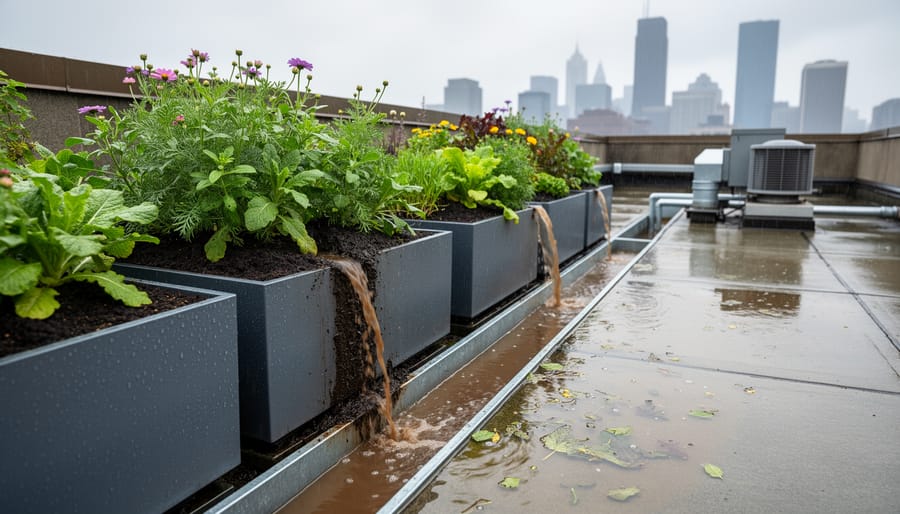
When you picture pesticide application, you probably imagine it staying neatly on the intended crops. The reality is messier. Even on calm days, fine droplets and vapors escape target areas, traveling on air currents to reach places never meant to receive them. This airborne movement, called pesticide drift, turns agricultural chemicals into uninvited guests in neighboring ecosystems.
The numbers tell a stark story. Research has documented that wild plant diversity drops within 500m of treated fields by more than half. That’s over 1,600 feet, the length of five city blocks, where native wildflowers, grasses, and shrubs struggle to survive simply because they’re downwind from conventional farming operations.
For urban green spaces and rooftop gardens positioned near agricultural zones, this invisible reach creates challenges most city dwellers never consider. A rooftop garden on the edge of a suburban development, bordered by farmland, sits squarely in drift’s path. The same wind that cools your tomato plants in July can carry herbicide residues from nearby fields, potentially affecting sensitive crops or reducing the diversity of beneficial insects you’re trying to attract.
The drift doesn’t discriminate. Insecticides targeting crop pests land on pollinator-friendly plantings you’ve carefully selected. Herbicides designed to kill weeds may stress vegetables or ornamentals in your raised beds. Even organic rooftop operations face contamination risks when located within drift range, complicating certification and undermining pesticide-free growing efforts.
Understanding drift patterns matters when you’re planning urban agriculture projects. Wind direction, application methods, and proximity to treated land all factor into your garden’s exposure risk and inform decisions about protective barriers or crop placement.
The Soil Beneath Our Cities: Microbial Communities at Risk
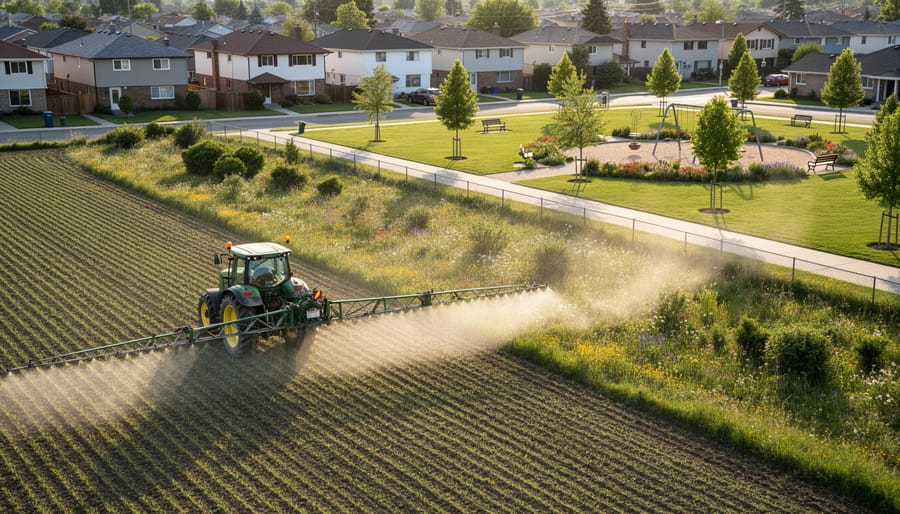
Healthy soil teems with invisible life. Billions of microorganisms per gram of earth work around the clock, breaking down organic matter and cycling nutrients that plants need to thrive. When pesticides enter this underground ecosystem, they don’t discriminate between target pests and these essential workers. Research confirms that pesticide use leads to a reduction in soil microbial diversity and biomass, undermining the very foundation that sustainable urban agriculture depends on.
Before we explore the implications for your rooftop garden, understanding a few key concepts helps clarify what’s at stake:
- Soil Microbial Diversity
- The variety of bacteria, fungi, and other microorganisms living in soil. Greater diversity creates a more resilient ecosystem capable of nutrient cycling, disease suppression, and adapting to environmental stresses.
- Biomass
- The total mass of living microorganisms in a given volume of soil. Higher microbial biomass indicates a more biologically active soil that can support vigorous plant growth.
- Nutrient Cycling
- The process by which microorganisms convert organic matter into plant-available nutrients like nitrogen, phosphorus, and potassium. This natural recycling system reduces the need for synthetic fertilizers.
- Organic Matter Decomposition
- The breakdown of dead plant material, food scraps, and other carbon sources by soil organisms. This process releases nutrients while building soil structure and water-holding capacity.
For urban growers managing rooftop gardens or container systems, these microbial communities aren’t just nice to have. They’re the difference between sterile growing media that requires constant inputs and living soil that becomes more productive over time. When pesticide residues accumulate in your soil mix, they can suppress the beneficial microbes responsible for converting compost into plant food, fighting off soil-borne diseases, and maintaining the porous structure that roots need to breathe.
The agritecture approach recognizes that every design decision affects this underground world. Limited soil depth on rooftops means concentrated root zones where any contamination has amplified effects. That’s why professional teams building sustainable urban food systems prioritize soil health from day one, choosing practices that nurture rather than undermine the microbial partners that make productive, resilient gardens possible in challenging city environments.
Wildlife and Beneficial Insects: The Collateral Damage
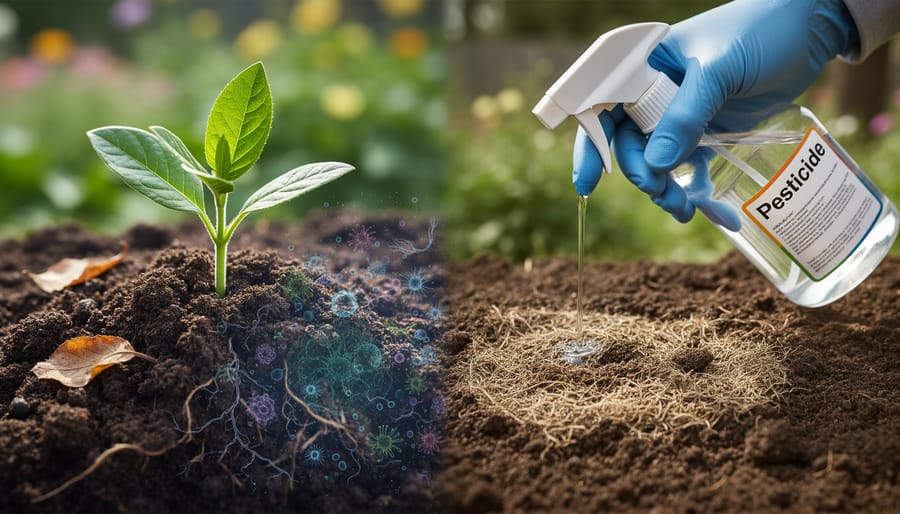
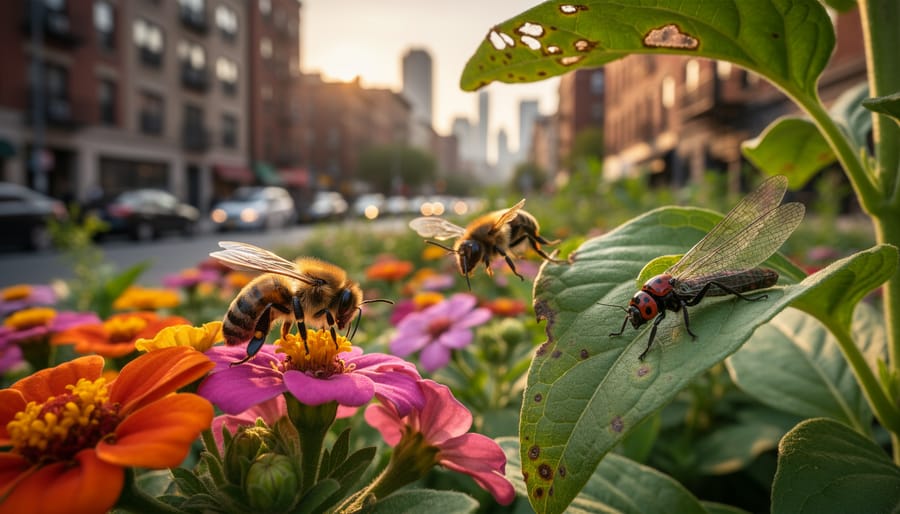
Pesticides don’t discriminate. When they drift through the air or wash into soil, they hit whatever lives nearby, including the creatures we actually want around. Bees that pollinate your rooftop tomatoes, ladybugs that devour aphids, ground beetles that hunt cutworms: all face exposure when chemical applications extend beyond their intended targets.
Excessive pesticide use means beneficial insects can decline dramatically, weakening the natural pest control systems that make urban agriculture viable without heavy intervention. Lose enough ladybugs, and suddenly you’re battling aphid infestations that were previously managed for free. Lose enough native bees, and your yields drop because crops aren’t getting pollinated effectively. These aren’t abstract ecological concerns, they’re practical problems that affect what you harvest from your rooftop garden.
Urban environments already stress insect populations through habitat fragmentation and light pollution. Adding pesticide exposure creates a triple threat that hits rooftop gardens harder than many realize. Even small amounts of residual chemicals can disrupt insect behavior, navigation, and reproduction, effects that compound across a season.
The ripple moves outward from there. Fewer beneficial insects mean birds that feed on them struggle to raise chicks. Predators like dragonflies and spiders that keep mosquito populations in check disappear. What began as a targeted application on farmland miles away can unravel the biodiversity that makes your urban green space resilient and productive. For anyone designing or maintaining rooftop agriculture in 2026, protecting these beneficial species isn’t just environmental stewardship, it’s protecting the workforce that keeps your ecosystem balanced without constant human intervention.
Urban Agritecture: Your Role in Reducing Pesticide Impact
After seeing how pesticides reshape water, soil, and wildlife beyond their intended targets, the question becomes: what can you do about it? If you’re cultivating a rooftop garden or planning an urban agriculture project, you’re not just a passive observer of these environmental challenges. You’re positioned to be part of the solution.
The good news is that urban growers have tools and techniques that dramatically reduce or eliminate pesticide reliance. Two frameworks stand out: Beneficial Management Practices (BMPs) and Integrated Pest Management (IPM). BMPs focus on preventing contamination through smart design, managing water runoff, protecting soil health, and creating physical barriers that keep potential pollutants contained. IPM takes a different angle, using a hierarchy of pest control methods that prioritize observation, prevention, and biological controls before ever considering chemical intervention.
These aren’t theoretical concepts. They’re proven urban gardening strategies that professionals across architecture, green sciences, and urban planning use daily to create productive spaces that enhance rather than degrade city ecosystems. The urban gardening benefits extend beyond fresh produce, you’re demonstrating that food production doesn’t require sacrificing environmental health.
Your rooftop or urban plot becomes a controlled environment where you make every input decision. Unlike conventional agriculture, where pesticide drift and runoff affect vast areas, your urban space offers precision. You can build soil from scratch with beneficial microbes intact, establish companion plantings that repel pests naturally, and create habitat for beneficial insects that do your pest control work for free.
Integrated Pest Management for Rooftop Gardens
Integrated Pest Management begins with observation, not intervention. Check your rooftop containers and raised beds twice weekly during the growing season, looking for early signs of pest activity, discolored leaves, tiny holes, sticky residue, or the insects themselves. Keeping a simple log helps you spot patterns: aphids clustering on your tomatoes at the same time each June, for instance, or fungal issues following heavy rains. This monitoring lets you respond precisely rather than spraying preemptively.
Prevention forms the foundation of rooftop IPM. Start by choosing pest-resistant plant varieties suited to your exposure and microclimate. Position plants with proper spacing for air circulation, which reduces fungal diseases that might otherwise tempt you toward fungicides. Healthy soil supports vigorous plants that naturally resist pests, so focus on compost amendments and proper nutrition. Physical barriers work remarkably well in elevated settings: row covers protect leafy greens from flying insects, copper tape deters slugs climbing container edges, and netting keeps birds from damaging fruit.
When pests appear despite these measures, biological controls offer your next line of defense. Release ladybugs or lacewings to consume aphids, or introduce parasitic wasps that target caterpillars without harming beneficial insects. Neem oil, insecticidal soaps, and horticultural oils handle soft-bodied pests with minimal environmental impact. These products break down quickly and won’t contaminate your drainage system or drift to neighboring rooftops.
Cultural practices amplify your IPM success throughout the season. Rotate crop families between containers to disrupt pest life cycles. Remove spent plants promptly rather than letting them harbor overwintering pests. Your fall cleanup becomes a crucial pest-management step, clearing debris that would otherwise shelter insects for spring emergence.
Chemical intervention remains a last resort, used only when monitoring confirms pest pressure that exceeds your biological controls’ capacity. If you must apply something, choose the least toxic option that targets your specific pest, apply it during calm weather to prevent drift, and follow label directions exactly. Most rooftop scenarios never reach this point, your elevated position naturally reduces pest pressure compared to ground-level gardens, and the contained environment makes prevention and monitoring straightforward.
This layered approach protects not just your crops but the broader urban ecosystem your rooftop connects to through air, water, and visiting pollinators.
Beneficial Management Practices: Protecting Water and Soil
Beneficial Management Practices translate agricultural wisdom into practical solutions for urban growers who want to prevent water and soil contamination before it starts. Unlike large farms, rooftop gardens and urban agritecture projects operate in contained environments where runoff flows directly into city drainage systems, making prevention even more critical.
| Practice | Environmental Benefit | Urban Application Difficulty |
|---|---|---|
| Buffer zones (native plants) | Filters runoff, prevents chemical spread | Low – adaptable to edges, containers |
| Proper drainage design | Controls water flow, reduces erosion | Medium – requires initial planning |
| Cover cropping between seasons | Protects soil, reduces bare ground runoff | Low – works in raised beds, small spaces |
| Strategic planting patterns | Minimizes exposed soil, improves water retention | Low – easily integrated into design |
Canada’s regulatory guidance emphasizes that BMPs reduce runoff and soil erosion, the primary pathways through which contaminants move into water systems. For rooftop gardeners, this means designing growing spaces that capture and filter water rather than channeling it straight into gutters.
Start by establishing buffer zones around your growing beds using native plants that thrive in your climate. These living filters absorb excess moisture and trap any particles before they wash away. In tight urban spaces, even a single row of deep-rooted herbs along bed edges provides meaningful protection.
Drainage design matters more than most urban growers realize. Slope beds slightly away from building edges toward designated collection points. Install gravel layers beneath soil to slow water movement and allow filtration. During mulch and debris cleanup maintain these drainage pathways so water flows where you intend rather than pooling or cascading unpredictably.
Cover cropping transforms empty beds from erosion risks into soil protectors. Between harvests, plant quick-growing clover, rye, or buckwheat to shield soil from heavy rain and wind. These temporary crops also build organic matter and fix nitrogen, improving soil health while preventing runoff.
Strategic planting reduces bare soil exposure throughout the growing season. Use succession planting and companion crops to maintain ground cover. Dense plantings create a living mulch that intercepts rainfall before it hits soil directly, dramatically reducing erosion even during intense urban downpours.
Environmental Risk Assessment: What Urban Growers Should Know
Before applying any product in your rooftop garden, you should understand the regulatory safeguards meant to protect our shared environment. Environmental risk assessment is the scientific process that evaluates whether pesticide exposure could harm plants, animals, and ecosystems, a critical tool that shapes what products reach the market and under what conditions they can be used.
In Canada, these assessments examine how a pesticide moves through soil, water, and air, and what concentrations might affect non-target organisms. Regulators study breakdown rates, mobility patterns, and toxicity to various species. The goal is straightforward: predict real-world environmental impacts before widespread use occurs.
For urban growers, this process matters because it informs the product labels you read. Those application rates, buffer zone requirements, and environmental warnings stem from risk assessments. However, these evaluations typically focus on agricultural scenarios, large fields with specific soil types and drainage patterns. Your rooftop garden presents different conditions. Shallow soil depths, confined spaces near air intakes, and proximity to neighbors mean even low-risk products require extra thought.
Responsible stewardship in agritecture means reading beyond the marketing claims. Check whether a product has passed environmental screening, understand its persistence in soil, and consider whether your growing environment amplifies certain risks. A herbicide that breaks down safely in deep farmland soil might behave differently in your eight-inch growing medium, potentially affecting runoff into your building’s drainage system.
The assessment framework gives you a baseline, but the choice remains yours. By understanding how regulators evaluate environmental safety, you’re better equipped to ask the right questions and prioritize alternatives that align with truly sustainable urban food systems.
Building Pesticide-Free Urban Food Systems in 2026
Building resilient urban food systems starts with design choices that make pesticide use unnecessary rather than merely discouraged. When architects, horticulturists, and urban planners collaborate from the earliest conceptual stages, they can engineer environments where pests struggle to establish themselves while beneficial organisms thrive. This integrated approach, what we call agritecture, treats the entire rooftop or vertical garden as an interconnected ecosystem rather than a collection of isolated planters.
The most successful pesticide-free systems in 2026 share common design principles. They incorporate diverse plant species that confuse pest populations and attract natural predators. Strategic placement of aromatic herbs near vulnerable crops creates natural barriers, while thoughtful spacing improves air circulation and reduces fungal pressures. Water management systems prevent the pooling that breeds mosquitoes and diseases, directing runoff through biofilters that capture any contaminants before they reach city drains.
Material selection plays an equally crucial role. Substrate mixes enriched with beneficial microbes establish robust soil food webs that suppress pathogenic organisms naturally. Container designs that promote healthy root development create vigorous plants better equipped to resist pest damage. Even structural elements contribute, perches for insect-eating birds, habitat features for ladybugs and lacewings, and overwintering sites for ground beetles transform the space into a self-regulating system.
This collaborative framework delivers results beyond pest control. Projects designed with environmental stewardship as a foundational principle reduce water consumption, support urban biodiversity, and produce food without adding to the chemical load city dwellers already face. The transformation happens incrementally, one rooftop at a time, but the collective impact reshapes how cities approach food production. By bringing together expertise across disciplines, we’re proving that urban agriculture can function as an environmental solution rather than another source of contamination.
Understanding how pesticides move through water, air, and soil isn’t just environmental science. It’s the foundation for smarter decisions in urban agriculture. When you know that pesticide drift can reduce wild plant diversity by over 50% within 500 meters of treated fields, or that soil microbial communities suffer from chemical exposure, you can design rooftop gardens and vertical farms that break this cycle entirely.
City dwellers have a unique opportunity to lead by example. Your rooftop or balcony garden doesn’t need to replicate industrial agriculture’s mistakes. Instead, it can demonstrate that productive food systems and environmental care aren’t opposites. They’re partners. By choosing integrated pest management, building healthy soil ecosystems, and designing spaces that support beneficial insects, you’re creating a living example of what’s possible.
At Roof Top Gardens, we’ve seen how collaboration between architects, green scientists, and urban planners transforms spaces into thriving food systems that protect rather than pollute. The agritecture approach prevents pesticide dependence from the design phase, creating urban landscapes where water stays clean, soil microbes flourish, and pollinators thrive alongside your vegetables.
The challenge facing our shared environment in 2026 isn’t just about reducing harm. It’s about actively rebuilding the connections between food production, biodiversity, and community health. Every pesticide-free rooftop garden, every thoughtfully designed urban farm, contributes to a larger shift toward sustainability.
Start where you are. Whether you’re planning your first container garden or designing a multi-level agritecture installation, you’re part of the solution. Create urban food systems that nourish people and planet alike. That’s how we build cities worth living in.
