Inspect your rooftop’s structural load capacity before installing any heating system—most residential roofs support 20-40 pounds per square foot, but a greenhouse with heating equipment can exceed this quickly. Contact this company or a structural engineer to verify your roof can handle the combined weight of the structure, soil, plants, and heating units safely.
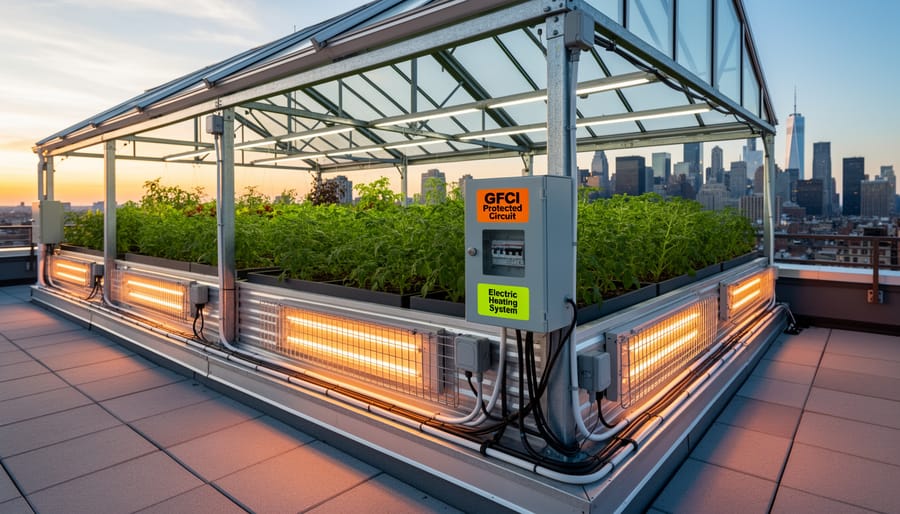
Install GFCI-protected electrical outlets within 6 feet of all heating equipment to prevent electrical fires and shocks in humid greenhouse environments. Water and electricity create dangerous conditions on rooftops where moisture accumulates rapidly, making ground-fault protection non-negotiable for any electric heaters, thermostats, or ventilation fans.
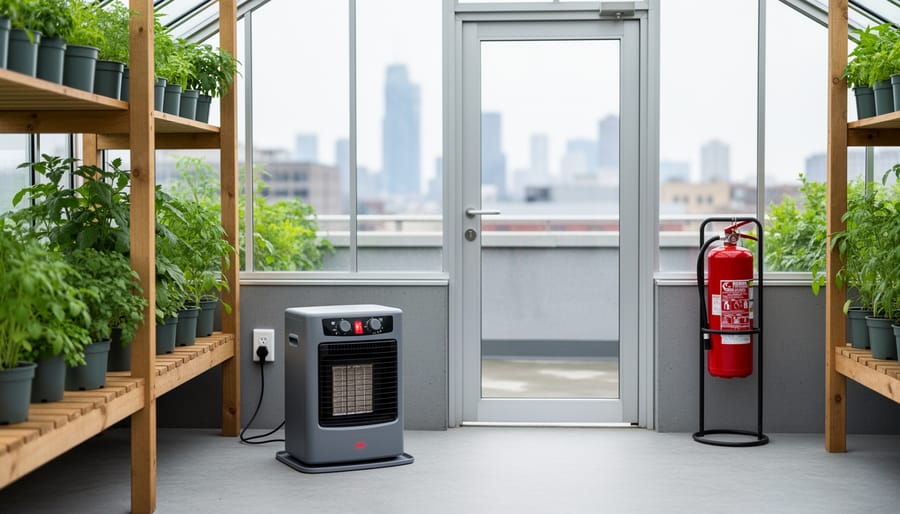
Position heating systems at least 18 inches away from combustible materials including wooden frames, plastic sheeting, and plant containers. Rooftop greenhouses face higher wind speeds than ground-level structures, which can blow lightweight materials into heating elements and ignite fires that spread quickly in enclosed spaces filled with dry soil and organic matter.
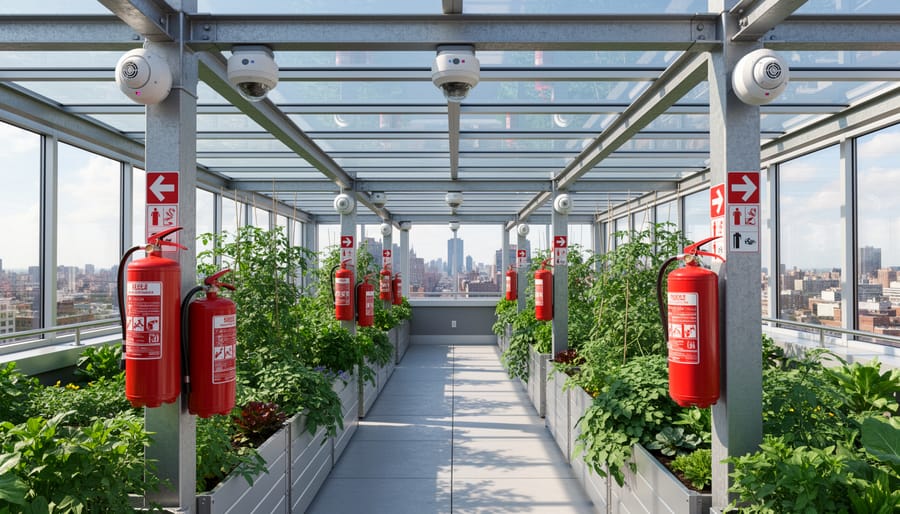
Your urban greenhouse planning must account for emergency access—ensure fire extinguishers rated for electrical and ordinary combustibles are mounted near exits, and maintain clear pathways to rooftop access points. Unlike ground-level greenhouses where you can quickly evacuate, rooftop installations require planned escape routes and response strategies.
Schedule annual inspections of heating systems, electrical connections, and ventilation equipment before each growing season. Rooftop conditions accelerate wear on components through temperature extremes, UV exposure, and weather stress that ground-level greenhouses never experience, making preventive maintenance your primary defense against heating-related hazards.
Why Rooftop Greenhouse Heating Demands Extra Attention
The Weight and Structural Challenge
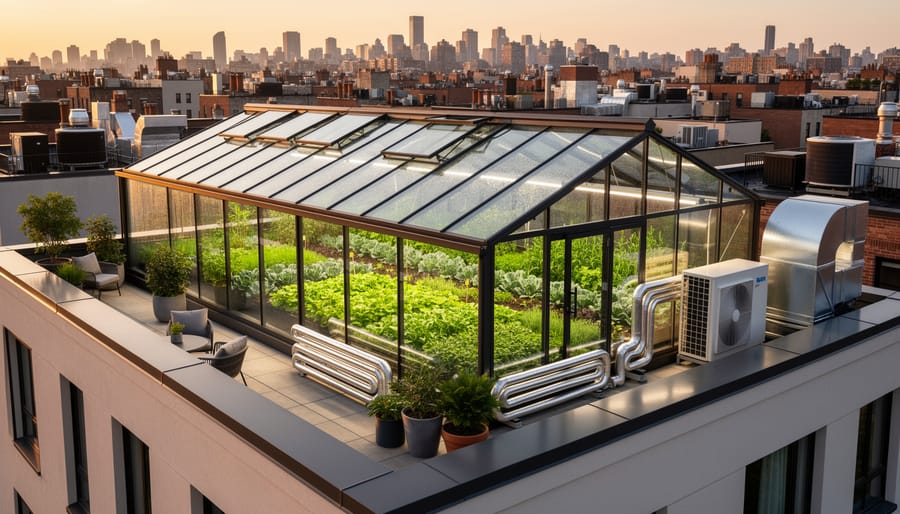
Before installing any heating system in your rooftop greenhouse, you need to address a critical but often overlooked concern: weight. Heating equipment, particularly boilers, water-based systems, and heavy fuel storage tanks, can add substantial load to your roof structure. A typical residential roof is designed to handle snow loads and the building’s own weight, but it may not account for the combined burden of a greenhouse, soil, plants, water reservoirs, and heating infrastructure.
This is where professional collaboration becomes essential. Before you purchase that perfect heating system, consult with a licensed structural engineer who can assess your building’s load-bearing capacity. They’ll evaluate factors like the age of your building, existing roof condition, distribution of weight, and local building codes. In many cities, this assessment isn’t just recommended—it’s legally required before rooftop construction.
The good news? Lightweight heating solutions exist specifically for rooftop applications. Electric radiant heating mats, for example, add minimal weight compared to traditional systems. Your structural engineer and greenhouse designer can work together to find heating options that keep your plants warm without compromising your building’s integrity or your family’s safety.
Heat Transfer to Your Living Space Below
Your rooftop greenhouse heating system creates a unique thermal relationship with the living space below. Understanding this connection helps you optimize both safety and energy efficiency.
The good news? A properly insulated greenhouse floor can actually reduce your home’s heating costs by creating a buffer zone against winter cold. However, without adequate insulation, you might experience unwanted heat transfer that increases cooling costs during warmer months or creates moisture problems on your ceiling.
The key consideration is the thermal barrier between your greenhouse and home. Most building codes require adequate insulation in the roof structure, but adding a greenhouse changes the equation. Work with your installation team to assess whether additional vapor barriers or insulation layers are needed. This prevents condensation buildup that could damage ceiling materials or create mold conditions.
Temperature extremes pose another concern. If your heating system malfunctions and overheats, that excess heat will radiate downward. Similarly, if heating fails completely during freezing weather, frozen pipes in your greenhouse could burst and leak into your home below. Installing temperature alarms and automatic shutoff systems protects both your plants and your living space. Regular monitoring ensures your greenhouse remains a beneficial addition rather than an unintended climate control challenge for the rooms underneath.
Choosing the Safest Heating System for Your Rooftop Greenhouse
Electric Heating Systems: The Urban-Friendly Option
For urban rooftop greenhouses, electric heating systems often emerge as the safest and most practical choice. Unlike propane or natural gas systems that require ventilation and fuel storage, electric heaters eliminate combustion risks entirely, making them ideal for elevated structures near living spaces.
Electric heating options include space heaters, seedling heat mats, and radiant panel systems. Space heaters work well for general temperature maintenance, while heat mats target root zones directly, reducing overall energy use. Radiant panels mounted on walls or ceilings provide even, gentle warmth without taking up valuable floor space.
The key to electrical safety starts with proper circuit requirements. Most rooftop greenhouses need dedicated 20-amp circuits to handle heating loads safely. Never overload circuits or use extension cords as permanent solutions. Ground Fault Circuit Interrupter (GFCI) protection is non-negotiable for wet environments where water and electricity coexist. These devices detect electrical imbalances and shut off power instantly, preventing shocks.
When working with our professional team on rooftop designs, we always recommend having a licensed electrician evaluate your building’s electrical capacity before installation. They’ll ensure your system meets local codes and can handle the additional load. While electric heating may have higher operating costs than gas alternatives, the enhanced safety profile and elimination of ventilation concerns make it the urban-friendly standard for rooftop agriculture.
Gas Heating: When (and When Not) to Consider It
Gas heating systems can be efficient and cost-effective, but they require serious safety consideration for rooftop greenhouses. Both propane and natural gas heaters produce carbon monoxide, an odorless and deadly gas that can accumulate in enclosed spaces. On a rooftop, your greenhouse sits directly above your living area, making proper ventilation absolutely critical.
If you’re considering gas heating, professional installation isn’t optional, it’s essential. A certified HVAC technician should evaluate your rooftop structure, assess ventilation needs, and install carbon monoxide detectors both inside the greenhouse and in rooms below. Gas lines running to your roof also need weatherproofing and secure mounting to prevent damage from wind or temperature fluctuations.
When gas heating makes sense: You have consistent access to natural gas lines, your rooftop structure can safely support the equipment weight, and you’re committed to regular maintenance and monitoring. When to avoid it: Your greenhouse is small (under 100 square feet), you lack proper ventilation options, or local building codes restrict rooftop gas installations.
Many urban growers find that electric heating systems offer simpler, safer alternatives for rooftop applications. While gas may seem economical initially, the required safety infrastructure often tips the scale toward electric or passive solar options for residential rooftop greenhouses.
Passive Solar and Thermal Mass: The Zero-Risk Baseline
Before exploring active heating systems, it’s worth noting that the safest rooftop greenhouse heating approach carries zero fire risk: passive solar design combined with thermal mass. This foundational strategy harnesses the sun’s energy during daylight hours and stores it for nighttime release, requiring no electrical components, fuel sources, or combustion whatsoever.
Thermal mass works by incorporating dense materials like water barrels, stone pavers, or concrete blocks inside your greenhouse. These materials absorb solar heat throughout the day and slowly radiate warmth as temperatures drop. A simple setup might include dark-colored 55-gallon water drums along the north wall of your greenhouse, which can stabilize temperatures by 10-15 degrees Fahrenheit without any safety concerns.
Proper insulation complements thermal mass beautifully. Double-wall polycarbonate panels, bubble wrap installed against glazing during winter months, and well-sealed gaps prevent heat loss while maintaining complete safety. For rooftop applications, where wind exposure increases heat loss, weatherstripping and caulking become even more critical.
Consider passive solar heating as your first line of defense against cold. Even if you eventually add supplemental heating systems, optimizing these zero-risk methods reduces your dependence on active heating, lowering both safety risks and operating costs while keeping your rooftop garden thriving naturally.
Critical Safety Measures Every Rooftop Greenhouse Needs
Smoke and Carbon Monoxide Detection
Installing proper detection systems is non-negotiable when heating your rooftop greenhouse. Since greenhouses experience high humidity and temperature fluctuations, you’ll need specialized detectors rated for these conditions. Look for smoke and carbon monoxide detectors with humidity-resistant casings (typically rated IP65 or higher) to prevent false alarms and ensure reliable operation.
Position detectors strategically near heating equipment, especially if you’re using fuel-burning systems like propane or natural gas heaters. Install at least one detector inside the greenhouse and another in any adjacent living space. Mount carbon monoxide detectors at breathing height, as CO mixes with air, while smoke detectors should go near the ceiling.
Many modern systems integrate seamlessly with your home’s existing alarm network, allowing you to monitor your greenhouse remotely through smartphone apps. This connectivity is particularly valuable for rooftop installations where you might not immediately notice problems. Consider working with a professional security installer who understands both greenhouse environments and building codes to ensure proper placement and integration. Test all detectors monthly and replace batteries according to manufacturer recommendations.
Fire Extinguisher Selection and Placement
Choosing the right fire extinguisher for your rooftop greenhouse heating system isn’t complicated, but it matters tremendously. For electric heating systems, keep a Class C extinguisher nearby, which handles electrical fires safely. If you’re using propane or natural gas heaters, opt for a multipurpose ABC extinguisher that tackles ordinary combustibles, flammable liquids, and electrical equipment.
Mount your extinguisher just outside the greenhouse entrance at eye level, around four to five feet from the ground. This placement ensures you can grab it quickly without entering a potentially dangerous space. Never store extinguishers inside the greenhouse where heat or moisture might compromise them.
Here’s your maintenance rhythm: inspect monthly for visible damage, check the pressure gauge, and shake dry chemical extinguishers to prevent settling. Schedule professional servicing annually. Many urban fire departments offer free inspections and training sessions, a valuable resource for first-time greenhouse owners. When collaborating with heating system installers, ask them to recommend extinguisher placement based on your specific setup’s risk zones.
Electrical Safety and Water Don’t Mix
Water and electricity create dangerous situations, especially in the humid environment of a rooftop greenhouse. Installing Ground Fault Circuit Interrupter (GFCI) outlets is non-negotiable—these devices detect electrical imbalances and shut off power within milliseconds, potentially saving lives. All outlets within six feet of water sources or irrigation systems must be GFCI-protected.
Choose electrical components specifically rated for damp or wet locations, with proper IP (Ingress Protection) ratings. Standard indoor wiring deteriorates quickly when exposed to constant moisture and temperature fluctuations. Position heating controls, timers, and electrical panels away from greenhouse water systems and irrigation zones, ideally in a protected enclosure.
While DIY installation might seem economical, professional electrical inspections are essential. Licensed electricians understand local codes and rooftop-specific requirements, similar to considerations for rooftop garden lighting installations. Schedule annual inspections to identify corrosion, loose connections, or worn insulation before problems escalate. This proactive approach protects your investment and ensures your urban growing space remains safe year-round.
Ventilation and Air Quality Monitoring
Proper ventilation isn’t just about plant health—it’s a critical safety feature in your rooftop greenhouse heating setup. When heating systems operate, they can produce carbon monoxide and other gases, particularly with combustion-based heaters. Without adequate air exchange, these dangerous gases can accumulate to hazardous levels. Your ventilation system should provide at least four to six air changes per hour during heating periods.
Humidity control directly impacts heating safety too. Excessive moisture creates condensation on electrical components and wiring, increasing short-circuit and fire risks. Install automated vents that work in tandem with your heating system, maintaining optimal humidity levels between 50-70% while preventing dangerous buildup.
Consider investing in monitoring systems that track carbon monoxide, temperature, and humidity levels. Modern smart sensors can alert you via smartphone when conditions become unsafe, giving you peace of mind whether you’re home or away. Many urban greenhouse operators now use these affordable monitoring systems as an essential safety layer, especially when their greenhouse sits directly above living spaces.
Installation Best Practices: Don’t Skip These Steps
Permits, Codes, and Professional Consultations
Before you install any heating system in your rooftop greenhouse, checking local building codes isn’t just smart—it’s essential. Most municipalities classify rooftop structures as building modifications requiring permits, especially when adding electrical or gas-powered heating systems. Your city’s building department can clarify whether your greenhouse needs structural engineering approval, electrical permits, or fire marshal inspections.
When should you call in the professionals? Legally, most areas require licensed electricians for hardwired heating installations and certified HVAC technicians for gas systems. Beyond legal requirements, professional consultation is wise when dealing with load-bearing concerns, complex electrical setups, or when you’re uncertain about fire safety protocols.
At Roof Top Gardens, we believe safe rooftop agriculture thrives on collaborative expertise. Our team approach brings together structural engineers who assess weight distribution, electrical contractors who ensure code-compliant wiring, and agritecture specialists who understand how heating systems interact with plant health and building integrity. This multidisciplinary perspective catches potential safety issues that single-discipline consultations might miss.
Think of permits and professional consultations as your safety net rather than obstacles. Yes, they add upfront costs and time, but they prevent catastrophic failures down the line. A properly permitted installation also protects your home insurance coverage and property value—critical considerations when you’re literally building on top of your investment.
Clearances, Insulation, and Fire-Resistant Materials
Proper clearances around your heating equipment aren’t just recommendations—they’re essential safety barriers that protect your rooftop greenhouse investment. Most heating systems require at least 18-36 inches of clearance from combustible materials, though specific requirements vary by manufacturer and local codes. Your rooftop structure needs breathing room, especially considering wind conditions that can shift materials unexpectedly.
When selecting materials for your rooftop greenhouse, fire-resistant options provide peace of mind without sacrificing functionality. Look for polycarbonate panels with fire ratings, metal framing instead of wood where possible, and fire-rated insulation materials. These choices might cost slightly more upfront, but they create multiple safety layers that matter significantly at roof level where evacuation routes are limited.
Insulation serves double duty in rooftop greenhouses—it maintains optimal growing temperatures while acting as a fire barrier. Mineral wool and fiberglass insulation offer excellent thermal performance and fire resistance. Avoid foam insulations near heating elements unless they’re specifically rated for high-temperature applications. The key is balancing thermal efficiency with safety specifications.
Working with experienced greenhouse designers and local fire safety professionals helps ensure your clearances meet code requirements specific to rooftop installations. They understand how factors like roof membrane materials, structural load considerations, and proximity to building ventilation systems affect your safety planning. This collaborative approach means your heating system works efficiently while keeping safety paramount.
Maintenance Routines That Prevent Heating Emergencies
A well-maintained heating system is your best defense against dangerous malfunctions and emergency situations in your rooftop greenhouse. Think of preventive maintenance as an insurance policy that pays dividends in safety, efficiency, and peace of mind.
Start each growing season with a comprehensive inspection. Before turning on your heating system for the first time, check all electrical connections for signs of corrosion, fraying, or looseness. Examine heating elements for cracks or damage, and test safety shutoffs to ensure they’re functioning properly. If you’re using radiant or forced-air systems, verify that vents and ducts are clear of debris, leaves, or nesting materials that could have accumulated during warmer months.
Monthly check-ins during active heating periods can catch problems early. Look for moisture accumulation around electrical components, which signals potential insulation breakdown or water intrusion issues unique to rooftop environments. Listen for unusual sounds like rattling, buzzing, or clicking that weren’t present before. Clean or replace air filters regularly, as clogged filters force systems to work harder and potentially overheat.
Consider scheduling professional inspections annually, particularly for gas or propane systems where stakes are highest. Experienced technicians can detect issues invisible to untrained eyes, from hairline cracks in heat exchangers to subtle carbon monoxide leaks. Many agritecture design firms offer maintenance partnerships that pair seasonal inspections with system optimization advice.
Keep a simple maintenance log noting inspection dates, repairs, and anomalies observed. This record helps identify patterns and provides valuable information if you need emergency service. Warning signs demanding immediate attention include burning smells, visible smoke, frequent breaker trips, or temperatures that won’t regulate properly. When these occur, shut down the system immediately and contact qualified professionals before resuming operation.
Rooftop greenhouse heating safety might seem daunting at first, but here’s the reassuring truth: it’s entirely manageable with proper planning and knowledge. Throughout this guide, we’ve explored how thoughtful system selection, professional installation, and regular maintenance create a secure environment for your elevated growing space. The key is approaching your project with the agritecture philosophy of integrating systems thoughtfully rather than rushing into quick fixes.
Remember that every successful rooftop greenhouse begins with understanding your unique situation—your building’s capacity, local climate conditions, and your specific growing needs. By prioritizing safety measures like proper electrical grounding, fire-resistant materials, and adequate ventilation, you’re not just protecting your investment; you’re creating a sustainable food source that can thrive for years.
Don’t let safety concerns prevent you from pursuing your urban agriculture goals. The rewards of fresh, home-grown produce and the environmental benefits far outweigh the initial planning effort. At Roof Top Gardens, our team understands the complexities of urban growing environments and offers consultations to help you implement safe, sustainable solutions tailored to your space. With the right guidance and commitment to safety, your rooftop greenhouse can become a thriving, secure addition to your urban home.
